PCB Design Review Services - Qmax Systems
PCB DESIGN SERVICES

Design ReviewServices.

/ Introduction

Electronic product development rarely proceeds from first-pass design to production without defects. Schematic errors, layout violations, obsolete components, and regulatory gaps are among the costliest issues discovered late in a program.

Qmax Systems provides structured, engineering-led Design Review Services that identify and resolve these issues before they reach the factory floor, the test lab, or the field.

Actionable
Findings.

Our review process is grounded in decades of industrial electronics engineering experience across power electronics, embedded systems, high-speed digital design, RF, and mixed-signal architectures.

We apply IPC standards, IEC requirements, and OEM-specific design rules to every engagement, delivering actionable findings — not just observations.

Whether you are launching a first IoT product, revising a legacy industrial controller, or migrating a platform to a new processor family, our engineers apply the same rigorous methodology.

Schematic Integrity

  • Netlist validation
  • Component lifecycle checks

Layout & SI

  • Trace impedance
  • Return path integrity

Regulatory

  • EMI/EMC readiness
  • Safety clearances

DFx

  • Manufacturing yield
  • Assembly feasibility
PHASE 1.1 / SCHEMATIC REVIEW

Circuit Correctness, Protection & Functional Verification.

A schematic is the definitive electrical specification of a product. Errors at this stage propagate through every downstream activity.

Our schematic review service provides a systematic audit of circuit correctness, component selection, and protective circuitry.

DELIVERABLE

Redlined schematic PDF with itemized findings, severity classification (Critical / Major / Minor), and corrective recommendations.

Schematic Review Verification - Qmax Systems

/ Scope of Review

Circuit Verification

Power rail topology, signal path integrity, and feedback loop analysis.

Component Validation

Voltage/current ratings, temperature derating, and tolerance stack-up.

Protection Circuits

ESD, OVP, OCP, reverse-polarity, and thermal shutdown logic.

Power Integrity

Decoupling logic, bulk sizing, and LDO/DC-DC sequencing.

Supervisory Review

Power-on reset timing, watchdog enable, and brownout detection.

Interface Compliance

I2C/SPI pull-ups, UART accuracy, and differential termination.

Clock Distribution

Oscillator loading, fanout buffering, and PLL filter selection.

Grounding & Isolation

Chassis vs. digital ground, and galvanic isolation barriers.

Annotation Quality

RefDes, net labels, and title block accuracy for production.

PHASE 1.2 / PCB DESIGN REVIEW

Functionality, DFM, DFA & DFx.

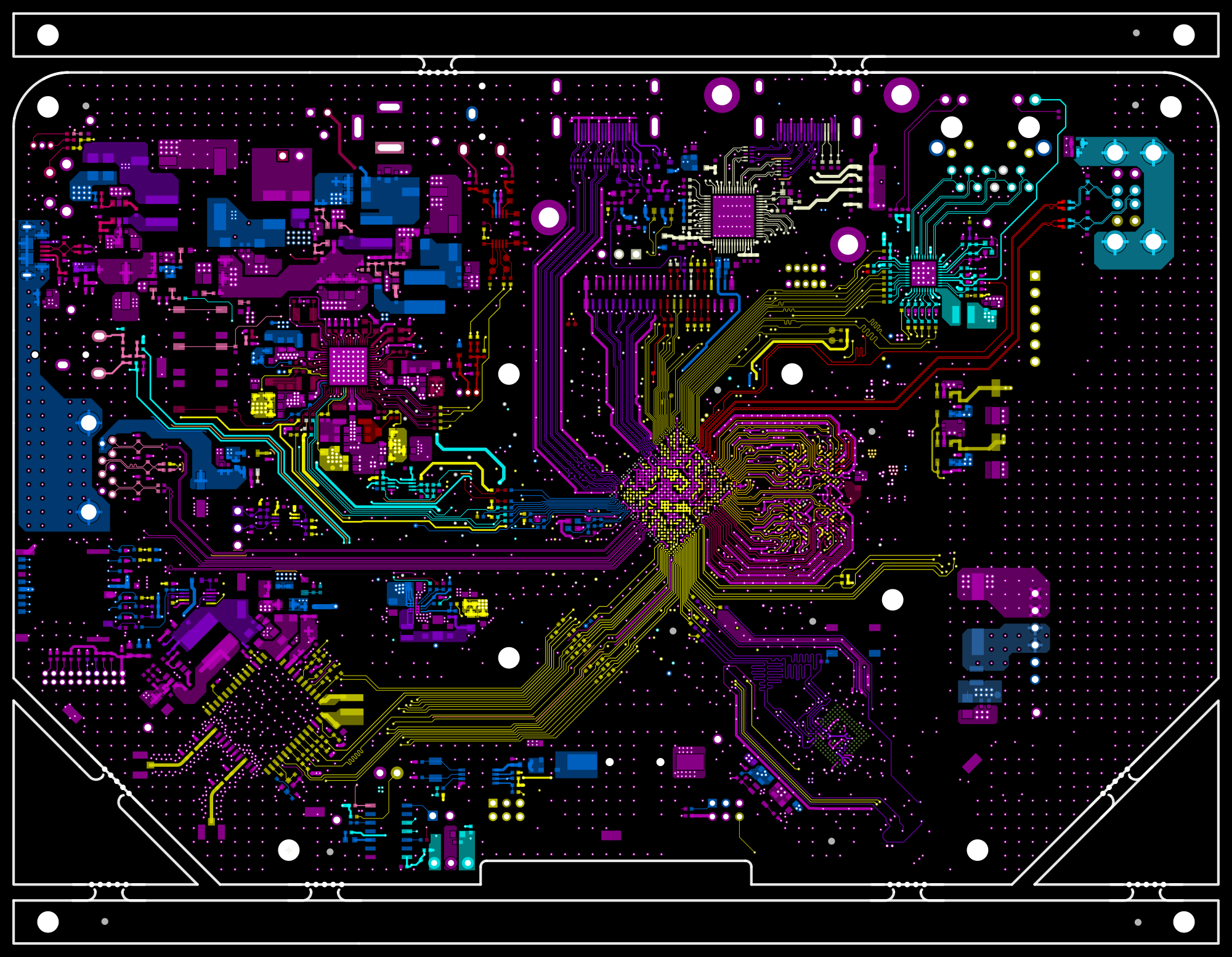
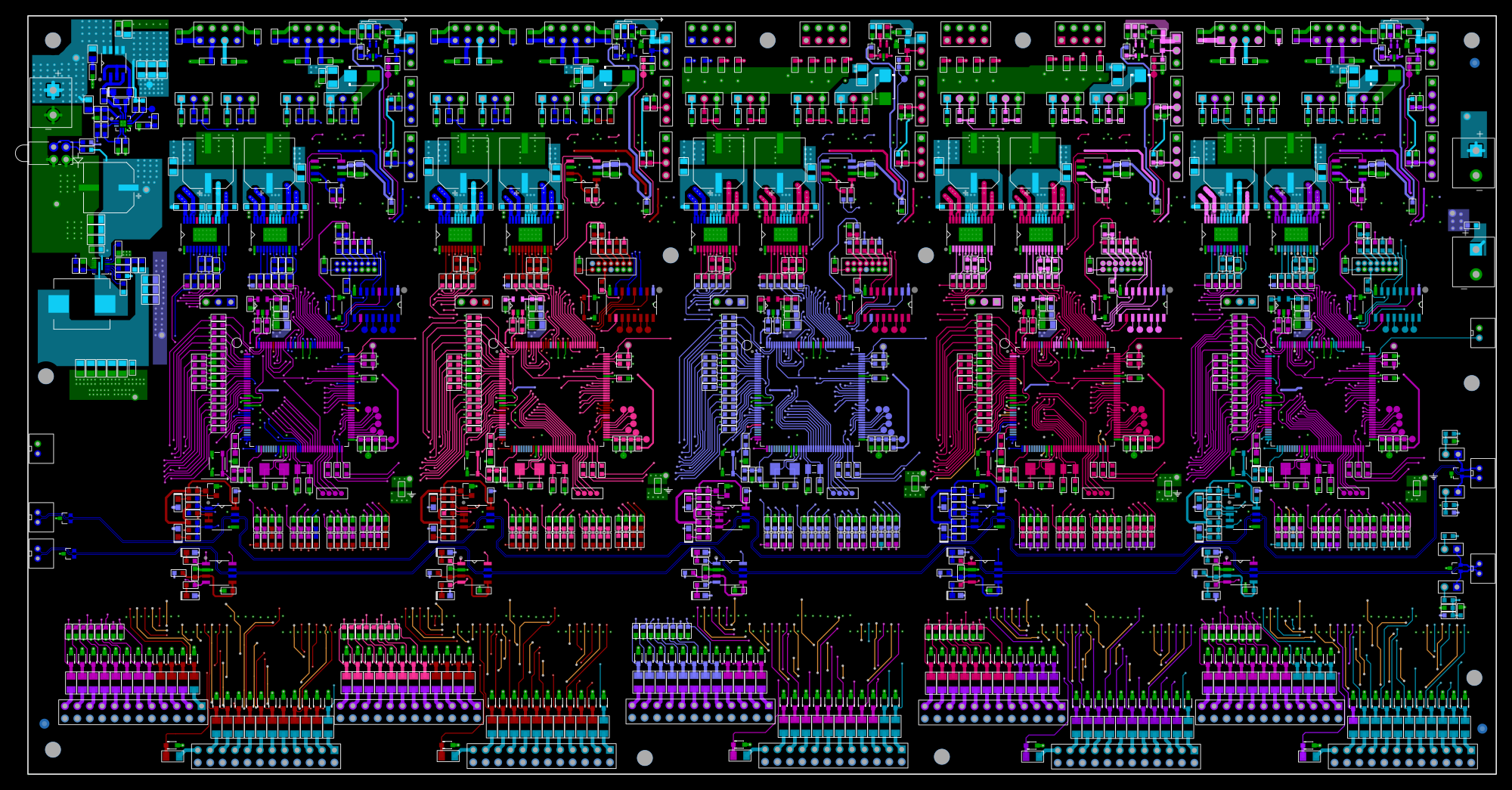
A verified schematic does not guarantee a manufacturable or reliable PCB. Our layout review applies IPC-2221/2222 standards alongside manufacturer-specific DFM rule sets.

Functionality Review

SI/PI checks, return path continuity, controlled-impedance stack-up, and high-speed net length matching.

DFM — Manufacturing

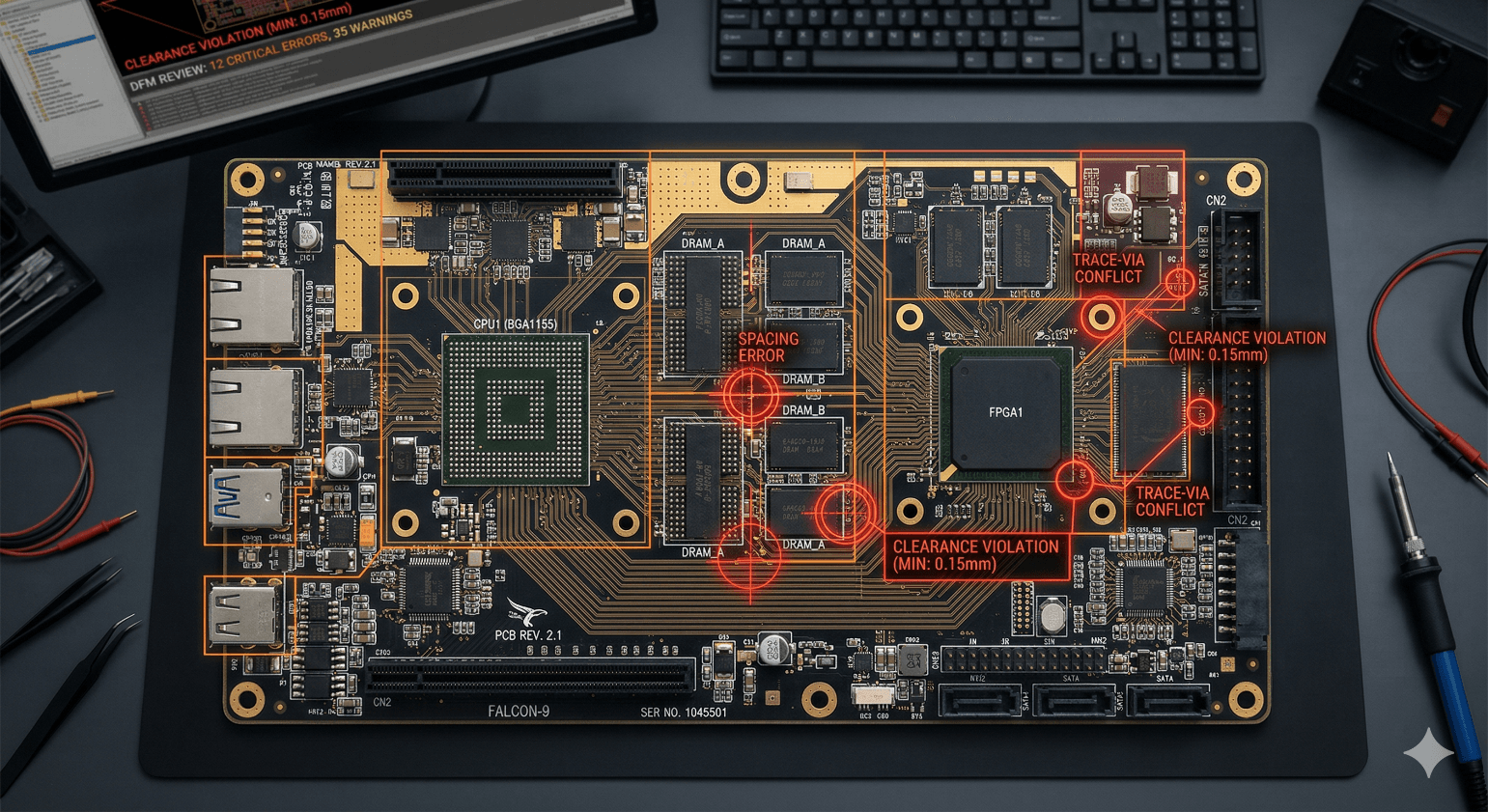
Trace width/spacing vs. fab minimums, via annular rings, copper pour relief, and panel utilization.

DFA — Assembly

Component courtyard clearance, SMD/THT mix strategy, IPC-7711 rework access, and fiducial placement.

DFT — Testing

Bed-of-nails test-point coverage, JTAG/SWD boundary-scan accessibility, and functional test placement.

DFR — Reliability

Via-in-pad treatment, copper-to-edge clearance, and BGA ball pitch vs. stack-up compatibility.

DFS — Service

Field-replaceable unit identification, connector labeling, and firmware update interface availability.
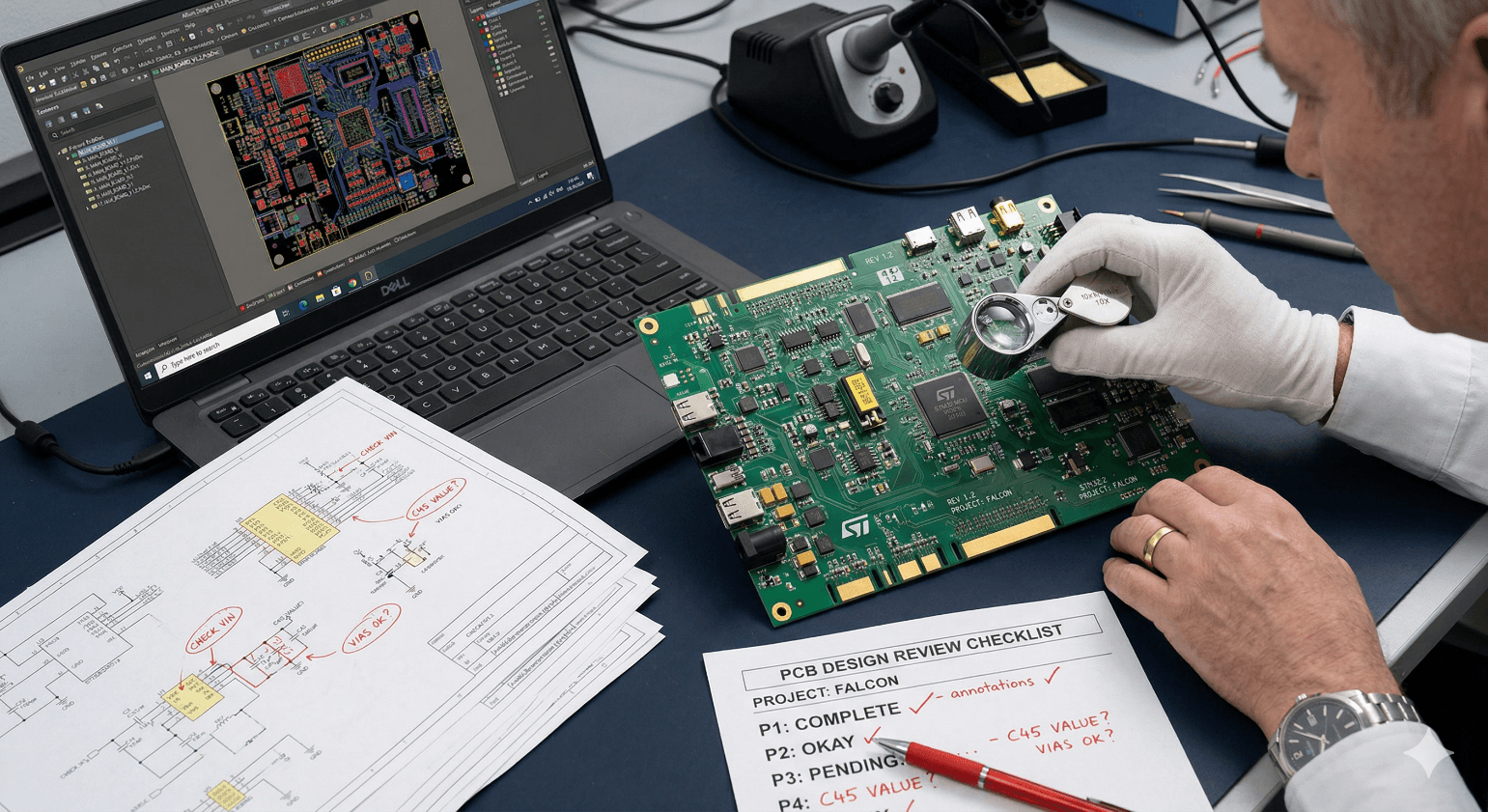
PCB Layout Review & DFx - Qmax Systems

/ Standards Applied

We evaluate boards against IPC-2221, IPC-2222, and IPC-7711/7721 class standards to evaluate fabrication yield, assembly quality, and field reliability.

PHASE 1.3 / REVERSE ENGINEERING

PCBA to CAD and
Schematics.

When original design data is unavailable — due to supplier closure, legacy asset acquisition, or disaster recovery — Qmax Systems reconstructs complete, accurate engineering documentation from physical hardware.

/ Internal Capabilities

01

BOM extraction from populated PCBAs.

02

X-ray and layer-peel analysis for stack-up reconstruction.

03

Net tracing and schematic regeneration.

04

CAD database creation in Altium, Allegro, PADS, and KiCad.

05

3D mechanical model generation for enclosures.

06

Firmware extraction via JTAG, SWD, and ISP boot interfaces.

Design data is reconstructed for legally permissible applications only.

SEE OUR PCBS DESIGN SERVICES
Board Layer-Peel & Reverse Engineering - Qmax Systems
FULL DOCUMENTATION PACKAGE

Deliverables include the BOM, full Schematics, high-fidelity PCB Layout files, and detailed Mechanical Drawings.

PHASE 1.4 / CONVERSION SERVICES

PDF, Scanned &
Gerber to CAD.

Engineering records in raster formats, scanned drawings, or Gerber outputs are converted to native EDA formats for modification, re-release, or redesign base.

PDF to EDA-Native

Net-accurate, symbol-verified conversion from PDF schematics to Altium/Allegro.

Scanned Drawing to CAD

Digital reconstruction of paper-based schematics and mechanical drawings.

Gerber to Database

RS-274X + drill data to routed PCB layout database with verified net list.

ODB++ to Native

Full design database reconstruction from ODB++ manufacturing packages.

Aperture Mapping

Precise copper reconstruction and layer stackup definition for multilayer boards.

Cross-Validation

Net extraction validated against available BOM or schematic fragments.

VALIDATION POLICY

Deliverable includes the EDA source files and a comprehensive conversion accuracy report verifying net-list accuracy and DRC compliance.

CAD Data Conversion Services - Qmax Systems
PHASE 1.5 / TOOLCHAIN MIGRATION

CAD Tool Translation &
Platform Migration.

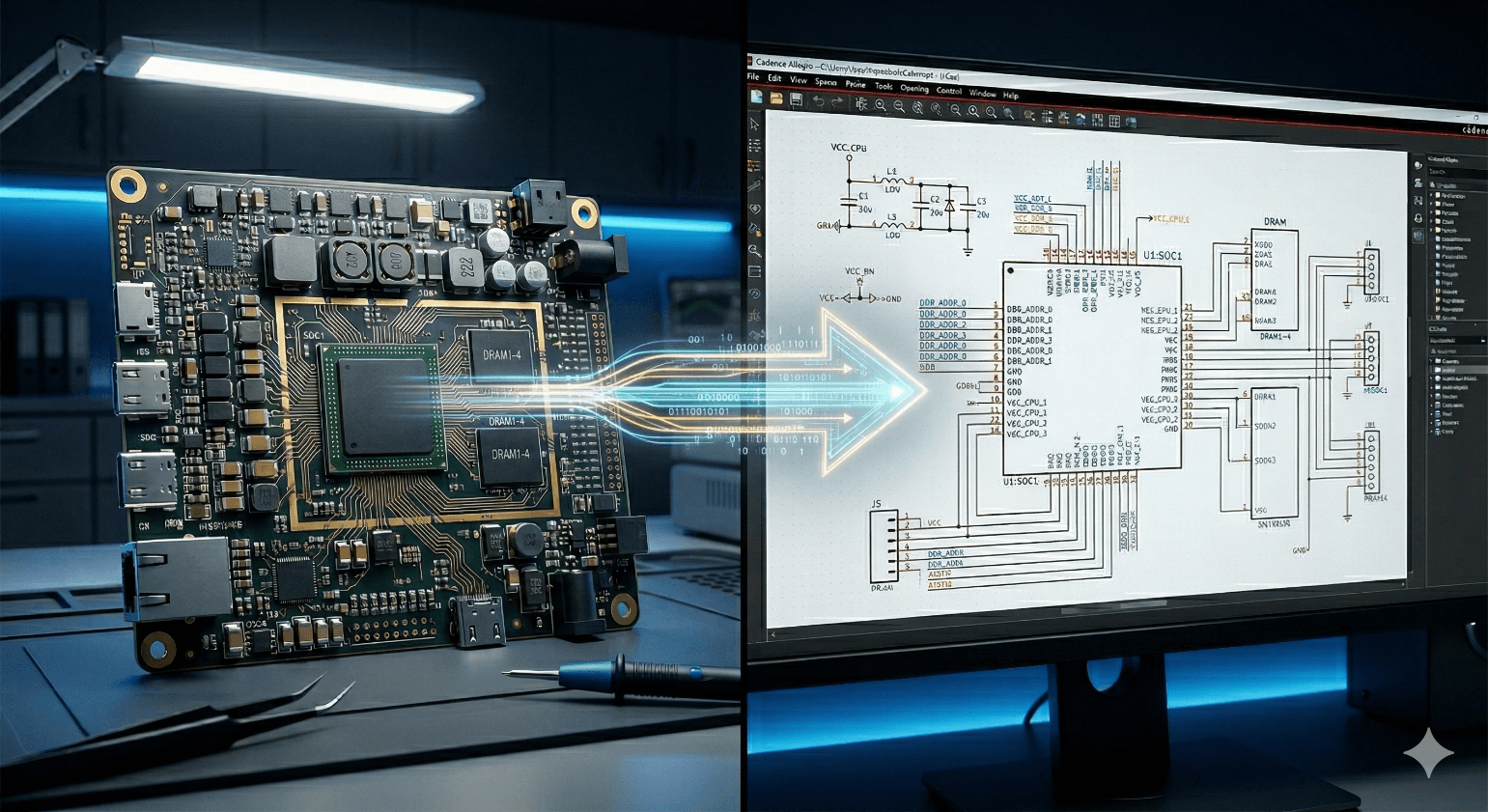
Enterprise EDA toolchain consolidations or licensing transitions require reliable translation of design databases. We eliminate subtle errors like net connectivity breaks and lost design rules.

Altium to Cadence Allegro / OrCAD

Mentor PADS / Xpedition to Altium Designer

KiCad to Professional EDA Platforms

Legacy (ORCAD / P-CAD / PROTEL) Migration

Library Translation & Footprint Verification

DRC/ERC Constraint Re-Creation

Net-list Equivalency Verification
EDA Toolchain Translation - Qmax Systems

/ Translation Strategy

Our process migrates stack-up configurations, impedance profiles, and constraint sets directly into the target environment, followed by exhaustive net-list cross-validation.

PHASE 1.6 / BoM OPTIMIZATION

Cost Reduction &
Obsolescence.

Component volatility directly impacts program schedule. A BoM with single-source dependencies or EOL parts carries unacceptable supply chain risk.

Lifecycle analysis (NRND, Obsolete, EOL)
Alternate sourcing & parametric equivalency
Cost optimization & functional substitution
Single-source risk mitigation strategy
REACH, RoHS, and Conflict Minerals compliance
Vendor List (AVL) development

DELIVERABLE

Redlined BoM with lifecycle status, alternates, and cost delta analysis.

PHASE 1.7 / DESIGN VALIDATION

DVT Planning &
Execution.

Passing design review does not confirm performance under real conditions. We verify hardware meets functional and reliability requirements.

DVT test plan development (IEC 60068, MIL-STD-810)
Power-up sequencing & communications verification
Environmental stress screening (Thermal, Humidity, Vibe)
EMI pre-compliance radiated/conducted support
Electrical safety parameter (Isolation, Leakage) audit
Failure analysis & root cause investigation

DELIVERABLE

Comprehensive DVT report with pass/fail status and corrective tracking.

PHASE 1.8 / COMPLIANCE REMEDIATION

Compliance Test
Failure Resolution.

Failures at certification labs are disruptive and expensive. We provide systematic root cause analysis and design correction for EMI, EMC, and electrical safety failures.
Domains Supported

  • CE Marking (EMC, LVD, RED)
  • FCC Part 15B/15C/68
  • IEC 61000 Series
  • IEC 62368-1 / 60950-1

Remediation Types

  • Filter topology correction
  • Guard trace & Plane revision
  • Common-mode suppressions
  • Firmware (Spread-spectrum)
Compliance Failure Testing - Qmax Systems

Qmax delivers corrected design files and a full pre-submission test report to ensure formal pass.

PHASE 1.9 / REGULATORY UPDATES

Design for Evolution &
Compliance Updates.

Regulatory requirements for electronic products continue to evolve. Cybersecurity mandates and energy efficiency standards require periodic design updates to maintain market access.

We help you navigate the EU Cyber Resilience Act (CRA), RED (ETSI EN 303 645), and the transition to UKCA from CE marking.

Cyber Resilience Act (CRA)

Full gap analysis for connected products.

RoHS 3 (2015/863)

Substance restriction impact assessment.

EU Battery Reg (2023/1542)

Design & documentation updates.

ErP Directive

Energy efficiency requirement updates.

UKCA Marking

Transition from CE for the UK market.

FCC RF Device Security

SDR and security requirement audits.

PHASE 1.10 / TEARDOWN ANALYSIS

Engineering-Grade
Teardown Analysis.

Competitive intelligence, failure investigation, and manufacturing process benchmarking require a structured teardown analysis. We deliver findings at the component, subsystem, and system level.

Mechanical Record

Disassembly documentation with photographic evidence.

PCBA Identification

Component-level BoM extraction and source analysis.

Process Assessment

PCB class, assembly quality indicators, and coating audits.

COGS Estimation

Price-of-goods-sold estimation from component data.

Thermal Strategy

Approach documentation for thermal management.

Software Inference

Architecture inference from hardware observations.

/ BENCHMARKING REPORT

Our deliverables include a comprehensive competitive benchmarking report against reference design metrics and industry standards.

Critical for IP due diligence and competitive manufacturing intelligence.

PHASE 1.11 / PLATFORM MIGRATION

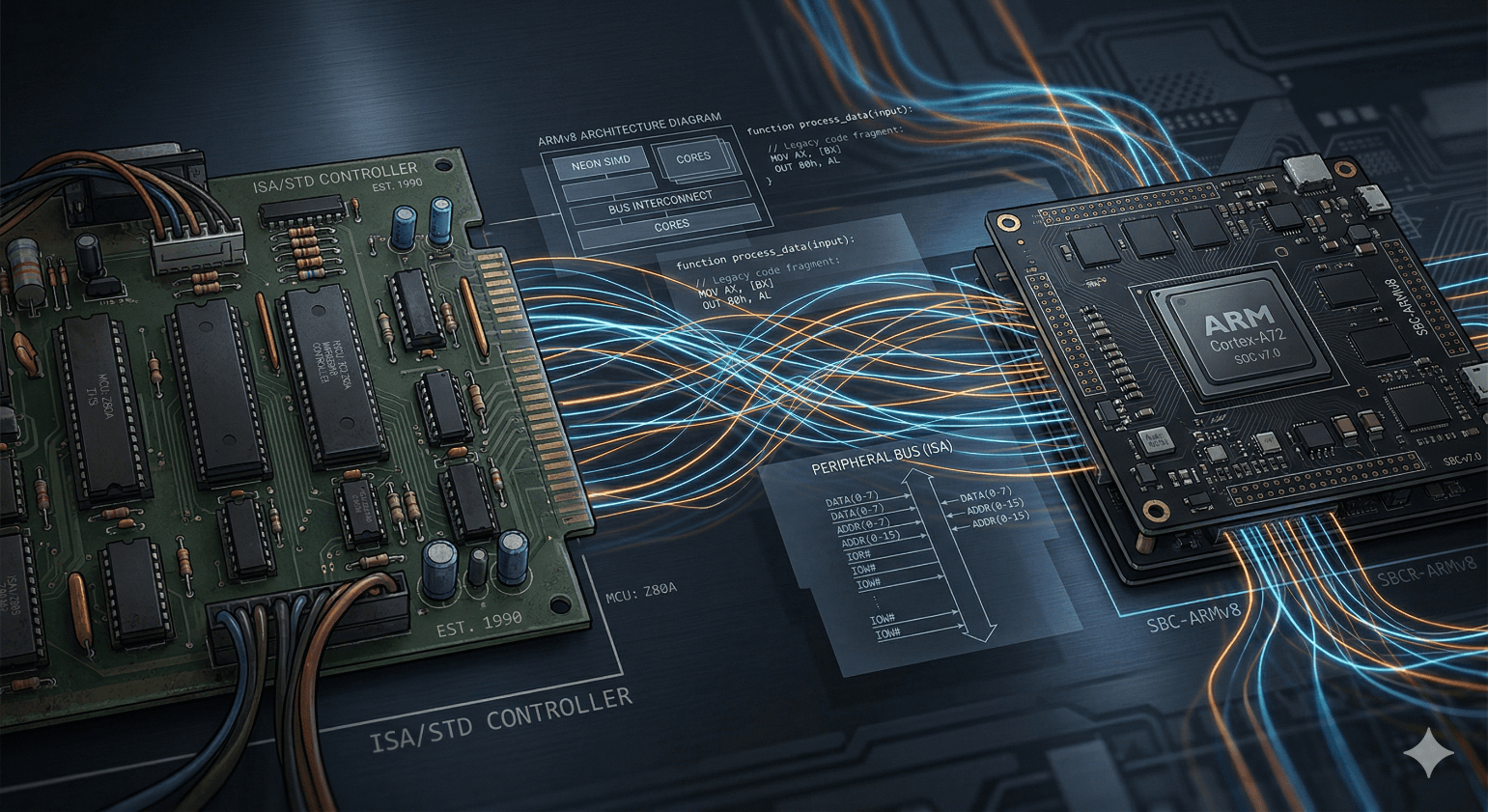
Legacy Systems to
New Platforms.

Industrial and embedded systems frequently remain in production long after the silicon depends on reaches end-of-life. We re-evaluate and migrate entire stacks to supported platforms.

/ Migration Process

/

Legacy System Audit

Architecture, firmware dependencies, and interface inventory.

/

Target Selection

Processor benchmarking, BSP availability, and supply chain outlook.

/

Hardware Re-design

Schematic revision and power budget recalculation.

/

Portability Assessment

Toolchain migration, HAL layer changes, and RTOS compatibility.

/

Regression Testing

Development and execution of full functional equivalency tests.

/

Production Qualification

DVT and EMC re-validation for formal regulatory release.

Common Scenarios

8-bit MCU to ARM Cortex-M, legacy FPGA (Xilinx Spartan-3, Altera Cyclone-II) to current-gen, and EOL single-board computer platforms.

Platform Migration & Modernization - Qmax Systems
PHASE 1.12 / FIRMWARE PORTING

Software & Firmware
Porting Services.

Firmware and embedded software tightly coupled to specific silicon architectures present significant migration challenges. We provide structured porting services that transfer functional behavior to new targets while maintaining testability.

Bare-Metal Porting

ARM Cortex-M variants (M0/M0+/M3/M4/M7/M33/M55).

RTOS Migration

FreeRTOS, Zephyr, ThreadX, uC/OS, VxWorks, Linux.

HAL & BSP

Re-implementation for target processor peripheral set.

Driver Porting

UART, SPI, I2C, CAN, Ethernet, USB, ADC, DAC, PWM, DMA.

Stacks

TCP/IP, MQTT, Modbus, CANopen, EtherCAT migration.

Bootloaders

Secure firmware update (FOTA/OTA) implementation.

/ COMPILER & ANALYSIS

Our porting process includes full compiler toolchain migration (GCC, IAR, Keil, LLVM) and rigorous static analysis to ensure code quality post-migration.

GCC / LLVM
IAR EWARM
Keil MDK
Static Analysis
PHASE 2 / WHY QMAX SYSTEMS

Methodical.
Defensible.
Proven.

Our review methodology is structured to detect high-consequence failure modes that automated DRC/LVS tools routinely miss.

Industrial Design Review - Qmax Systems
BEYOND AUTOMATED CHECKLISTS

2.2 / Breadth Across the Stack

We assemble multi-discipline review teams matched to the specific complexity profile of each engagement—covering mechanical, power, digital, RF, and firmware.

2.3 / Standards-Grounded Methodology

Every finding is documented against published IPC, IEC, IEEE, and JEDEC clauses, providing defensible records for regulatory submissions and internal quality audits.

  • IPC-2221B (Generic PCB Design)
  • IPC-7711/7721 (Rework & Repair)
  • IPC-A-610 (Assembly Acceptability)
  • IEC 61000 (Electromagnetic Compatibility)
  • IEC 62368-1 (IT & communication safety)
  • JEDEC JESD47 (Stress-Test Qualification)
  • IPC-SM-785 (Accelerated Reliability)

2.4 / Actionable Deliverables

Every report includes implementable corrective recommendations. Our engineers support the design team through the entire correction and re-verification cycle.

2.5 / Confidentiality & IP

We operate under strict NDA for every engagement. Design data is treated as strictly confidential and is not retained beyond the agreed engagement period.

2.6 / Rapid Turnaround

We provide defined turnaround commitments: 5 business days for schematic reviews and 7 business days for full PCB layout reviews.

2.7 / Scalable Engagement

Whether for a concept prototype or pre-production qualification for Fortune 500s, we structure our engagements to fit the program stage and budget.

2.8 / Proven Track Record

Our expertise spans industrial automation, medical, consumer IoT, and aerospace ground support across simple and complex multi-board systems.

PHASE 3 / CONSULTATION

1-Hour Engineering
Consultation.

No sales pitch. No commitment. A technical working session with a Qmax senior engineer on your specific design challenge.

What Happens

  • / Describe project stage & primary concerns
  • / Technical architecture deep-dive
  • / Identify highest-risk design areas
  • / Outline relevant review services
  • / Indicative scope & timeline mapping
  • / Receive actionable preliminary observations

Who Should Attend

  • / Startups preparing for EVT/DVT/PVT
  • / Teams inheriting legacy designs
  • / PMs facing compliance test failures
  • / Firms migrating from obsolete silicon
  • / Teams requiring a 2nd opinion

How to Schedule

Submit a brief project description through the consultation request form. A Qmax engineer will confirm the session within one business day. Sessions are conducted via video conference.

RESPONSE WITHIN 24H
NDA PRE-REQUISITE AVAILABLE

Clients & Platforms.

01

Entrepreneurs

Bringing nascent hardware concepts to a state of manufacturing readiness.

02

Startups

Identifying critical failure modes before capital-intensive production runs.

03

Fortune 500s

Rigorous third-party audits for high-reliability industrial and defense platforms.
READY TO START?Request your
design review.
INFO@QMAXSYS.COMRESPONSE WITHIN 1 BUSINESS DAY

Frequently asked questions.

What is the difference between a schematic review and a PCB design review?
A schematic review evaluates the electrical design intent: component selection, circuit topology, protection, and signal connectivity. A PCB design review evaluates the physical implementation: trace routing, impedance control, copper pours, component placement, and manufacturability. Both are required for a complete pre-production review.
At what stage should we engage Qmax for a design review?
The highest ROI comes at two stages: after schematic completion (before layout begins) and after PCB layout completion (before Gerber release). Review after prototype build is still valuable but incurs higher rework costs if changes are required.
What file formats does Qmax accept for reviews?
We accept native EDA files from Altium, Cadence Allegro/OrCAD, Mentor PADS/Xpedition, KiCad, and Eagle. We also accept PDF schematics, Gerber RS-274X, ODB++, IPC-2581, and scanned drawings under NDA.
What does DFM review specifically check on a PCB layout?
DFM review verifies minimal trace width/spacing, via annular rings, copper-to-board-edge clearance, soldermask expansion, impedance-controlled layer assignment, drill aspect ratios, and feature tolerances against fabrication capabilities.
How long does a typical PCB design review take?
Standard schematic reviews (100-300 components) take 3-5 business days. PCB layout reviews take 5-7 business days. Turnaround is confirmed at initiation based on board complexity and layer count.
Can Qmax reconstruct a schematic from a physical PCBA?
Yes. Our reverse engineering service uses component ID, X-ray imaging for multi-layer net tracing, and connectivity mapping to produce a functional schematic and EDA-native design database in 10-15 business days.
What is involved in converting Gerber files back to an editable CAD database?
The process involves extracting copper geometry, net extraction cross-layer analysis, mapping pads to footprints, and associating them with symbols to generate a functional netlist in a DRC-clean layout.
What EDA toolchains does Qmax support for CAD migration?
We support Altium, Cadence Allegro/OrCAD, Mentor PADS/Xpedition, and KiCad. Legacy tools include PROTEL, P-CAD, and legacy OrCAD. Libraries are rebuilt to target tool standards, not just translated.
How does Qmax approach BoM obsolescence management?
We query lifecycle status against industry databases (SiliconExpert, IHS Markit). NRND/Obsolete parts are escalated for replacement qualification based on parametric equivalency and vendor criteria.
What compliance standards does Qmax address?
We address CE Marking (EMC, LVD, RED), FCC Parts 15/68, IEC 61000 EMC series, IEC 62368-1 safety, UL 508A, ISO 26262 functional safety, RoHS 3, REACH, and cyber directives like the EU CRA.
Can Qmax identify the root cause of a radiated emissions failure?
Yes. We identify exceedance sources—often inadequate filtering, common-mode issues, or switching harmonics—correlate them with the design, and define targeted modifications for re-test.
What is DVT and how is it different from design verification?
Verification confirms implementation matches spec (via simulation/unit test). DVT (Design Validation Testing) confirms the product meets customer/regulatory requirements under real-world stress (temp, humidity, vibration).
How does Qmax handle firmware porting to a new microcontroller?
We perform an architecture audit (HAL, peripherals, RTOS), establishing a verified driver layer before application migration. Post-porting, a regression suite validates functional equivalency.
What legacy processor families has Qmax migrated designs from?
We've migrated from 8051, PIC16/18, 68K, 8086/186, PowerPC 5xx, ARM7TDMI, and legacy Spartan/Cyclone FPGAs to modern ARM Cortex-M/A, STM32, and current-gen FPGAs.
Does Qmax perform teardown analysis on competitor products?
Yes, for commercially available products within legal boundaries. Analysis covers mechanical construction, PCBA/Component ID, COGS estimation, and technology benchmarking. Firmware extraction follows DMCA guidelines.
How does Qmax structure pricing for design review services?
We quote on a fixed-fee basis per engagement for cost predictability. Pricing depends on component count, layer count, and signal speed. Initial 1-hour consultations are complimentary.
Can Qmax support a design review for a product with a field failure?
Yes. Field Failure RCA (Root Cause Analysis) involves documentation, inspection, component testing, and site-focused design review to identify vulnerabilities and define CAPA (Corrective Action) recommendations.
What is the Qmax approach to IEC 61508 functional safety applications?
We review safety requirements allocation, fault tolerance, diagnostic coverage, and SFF calculations, ensuring protection layers are independent and FMEDA (Failure Modes) analyze is complete.
Can Qmax work with designs that have partial or incomplete documentation?
Yes. We can initiate reviews from whatever exists—PDFs, fabricated boards, or Gerbers. We document gaps, prioritize high-risk functions, and can extend to include documentation reconstruction.
How does Qmax ensure confidentiality of design data?
All engagements start with a mutual NDA. Files are transferred via encrypted channels and stored on access-controlled internal servers. Engineers are under NDA, and data is destroyed post-engagement.
What are the next steps after a design review engagement?
Clients implement recommendations with our support. We remain available for re-reviews of critical fixes and can provide pre-build fabrication/assembly review and DVT planning support.