Step 1
Concept & Feasibility
Product concept and feasibility analysis.
Hardware Development Services
We provide full hardware lifecycle ownership, taking your product from early requirement analysis to production handover. Our lifecycle-driven approach minimizes risk, shortens development cycles, and ensures compliance readiness from day one.
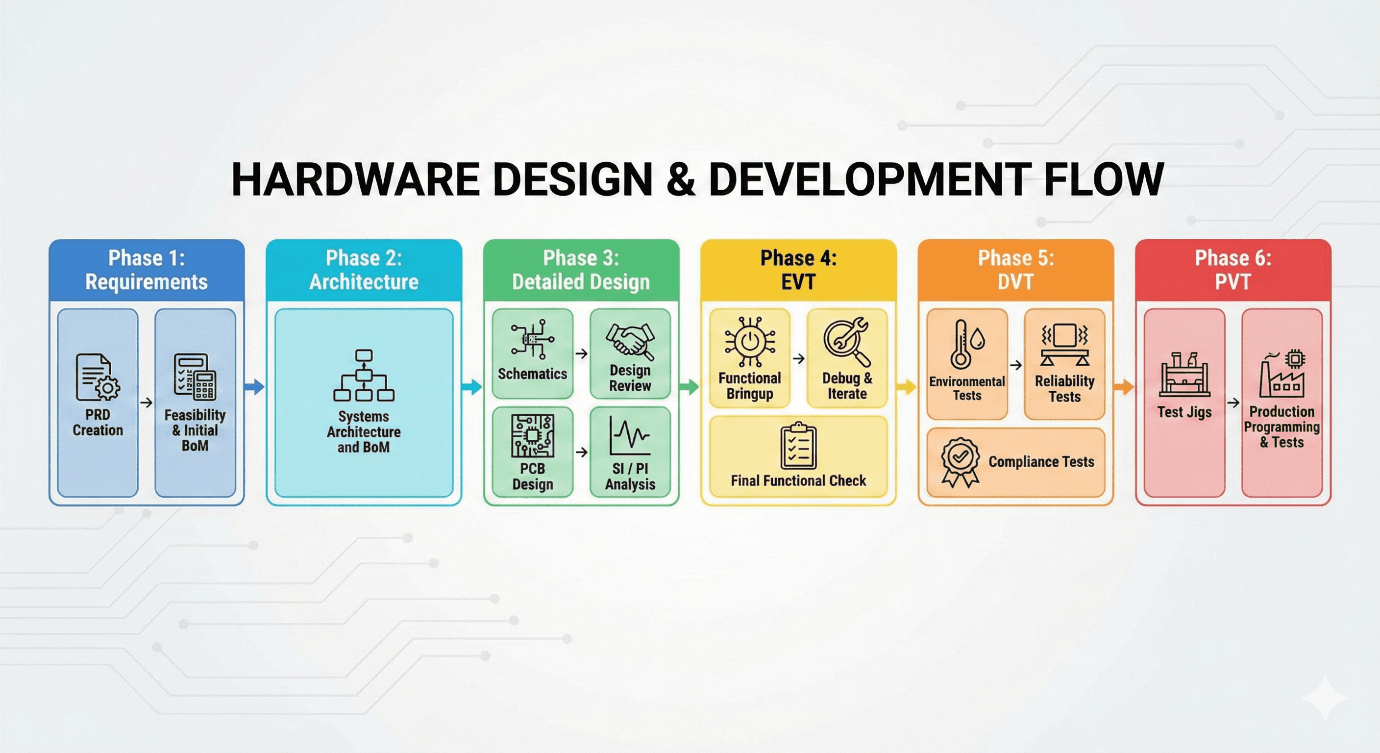
The Qmax Advantage: Our development methodology is built on a well-defined, architecture-first approach that prioritizes early risk identification. By utilizing rigorous requirement-driven design processes, our experienced project managers ensure that complex lifecycles are navigated smoothly. This structured workflow allows us to catch potential issues early, keeping your project on schedule and budget while eliminating the chaos often associated with hardware R&D.
Step 1
Product concept and feasibility analysis.
Step 2
System and hardware architecture definition.
Step 3
Detailed schematic design, PCB layout, and engineering analysis.
Step 4
Prototype build and board bring-up.
Step 5
Functional, environmental, and reliability testing.
Step 6
Pre-compliance, certification, and test coordination.
Step 7
Manufacturing support and lifecycle maintenance.
We deliver high-performance designs validated by decades of experience. Our HW engineering stack covers six critical domains.
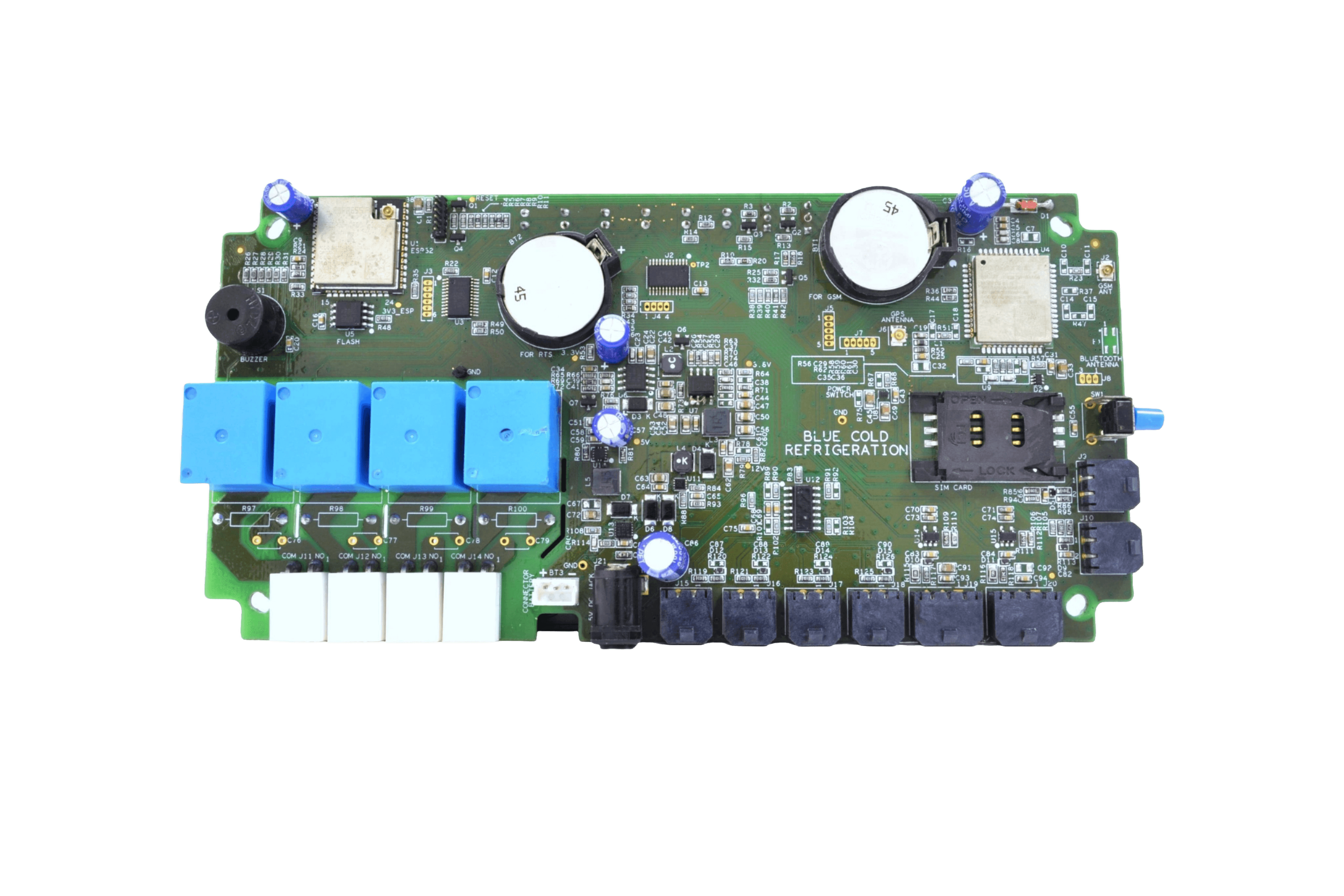
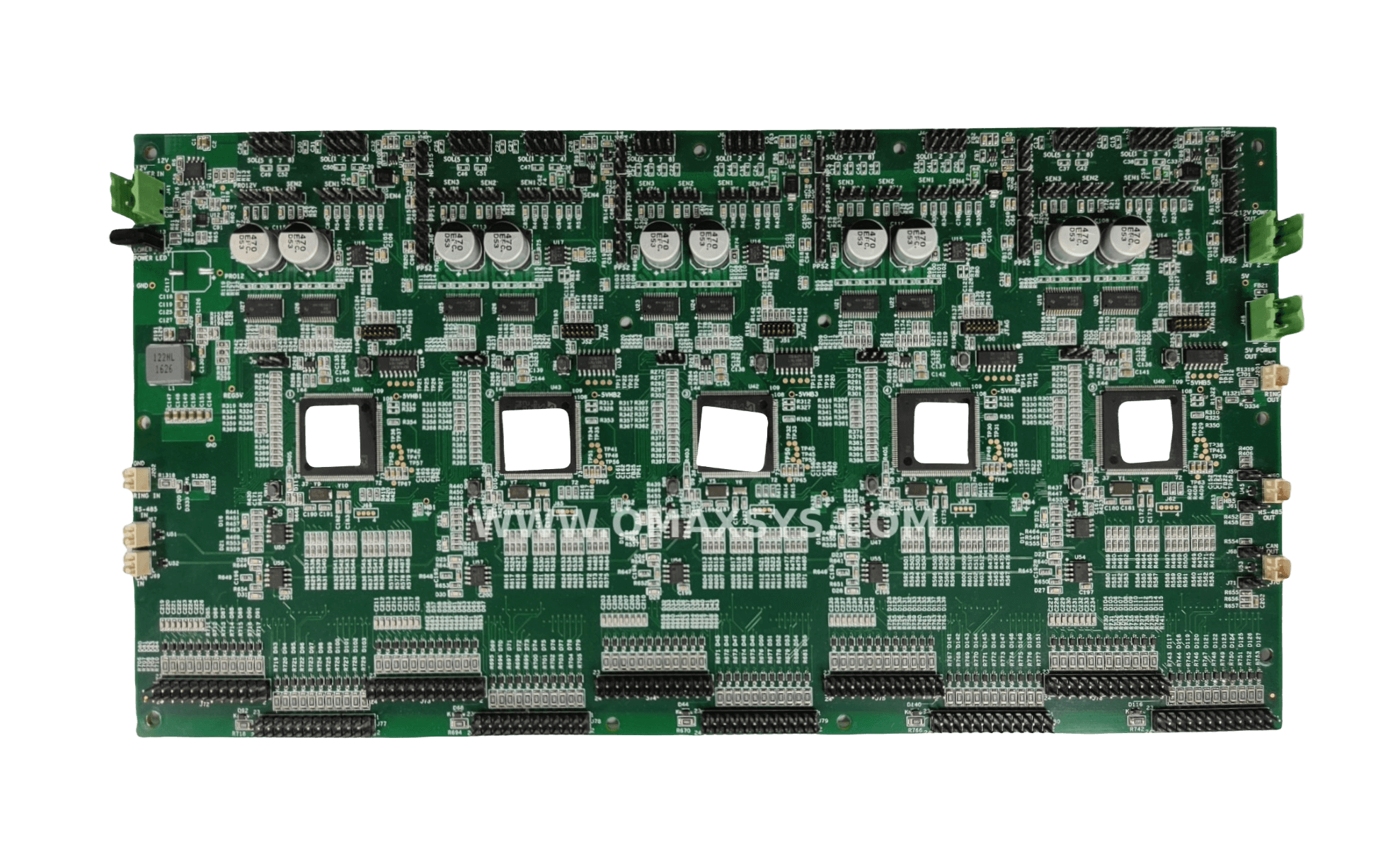
We design high-performance digital electronics, ranging from simple MCU boards to complex, high-speed, multi-processor systems.
We possess deep expertise in precision analog and mixed-signal design, critical for sensing, measurement, and low-noise applications.
Our RF designs are validated in real-world conditions, not just simulations.
We design robust power electronics for industrial, automotive, and energy applications.
Our in-house labs enable rapid debugging and validation, reducing dependency on external facilities during development.
The Qmax Advantage: Speed and accuracy are determined by having the right tools. We maintain dedicated in-house electronics and environmental laboratories fully equipped with high-bandwidth oscilloscopes, thermal cameras, and spectrum analyzers. This infrastructure allows our engineers to perform immediate prototype assembly, rework, and rigorous stress testing on-site, ensuring that potential design weaknesses are resolved long before the product reaches external certification labs.
Our labs are equipped with industry-standard tools for rigorous testing:
We perform early environmental validation to uncover design weaknesses before certification.
We ensure your product is ready for global markets. We work closely with NABL-certified laboratories to support EMC/EMI pre-compliance, safety testing, and environmental testing.
The Qmax Advantage: We don't just design for functionality; we design for compliance. Our processes are governed by ISO 9001 and ISO 13485 (Medical Devices) certifications, ensuring strict configuration management and traceability. Because our team has deep experience with regulatory standards like FCC, CE, IEC, and UL, we bridge the gap between engineering and certification, managing the complex gap analysis to ensure your product passes on the first attempt whenever possible.
We support multi-domain hardware development, adapting design rigor and documentation depth based on regulatory requirements.
The Qmax Advantage: Our versatility is a direct result of our multi-domain experience. Having worked on everything from safety-critical medical devices to rugged industrial controls, our engineers understand how to cross-pollinate best practices. We adapt our documentation depth and design rigor to match the specific needs of your industry, ensuring you get the robust reliability of an aerospace product with the agility required for consumer electronics.
Free 1-Hour Hardware Consulting Speak with a senior hardware architect to review your architecture and validate feasibility before you commit to development.
Book a Free Consultation