Connected Car Demonstration Unit
View Case
Qmax Systems provides hardware design services across the full lifecycle - from requirements analysis and architecture through schematic design, PCB layout, EVT/DVT/PVT validation, and production handover. This architecture-first process spans automotive, medical, aerospace, and industrial domains, cutting risk and shortening cycles with day-one compliance readiness.
Talk to our engineersFrom Requirement to Production
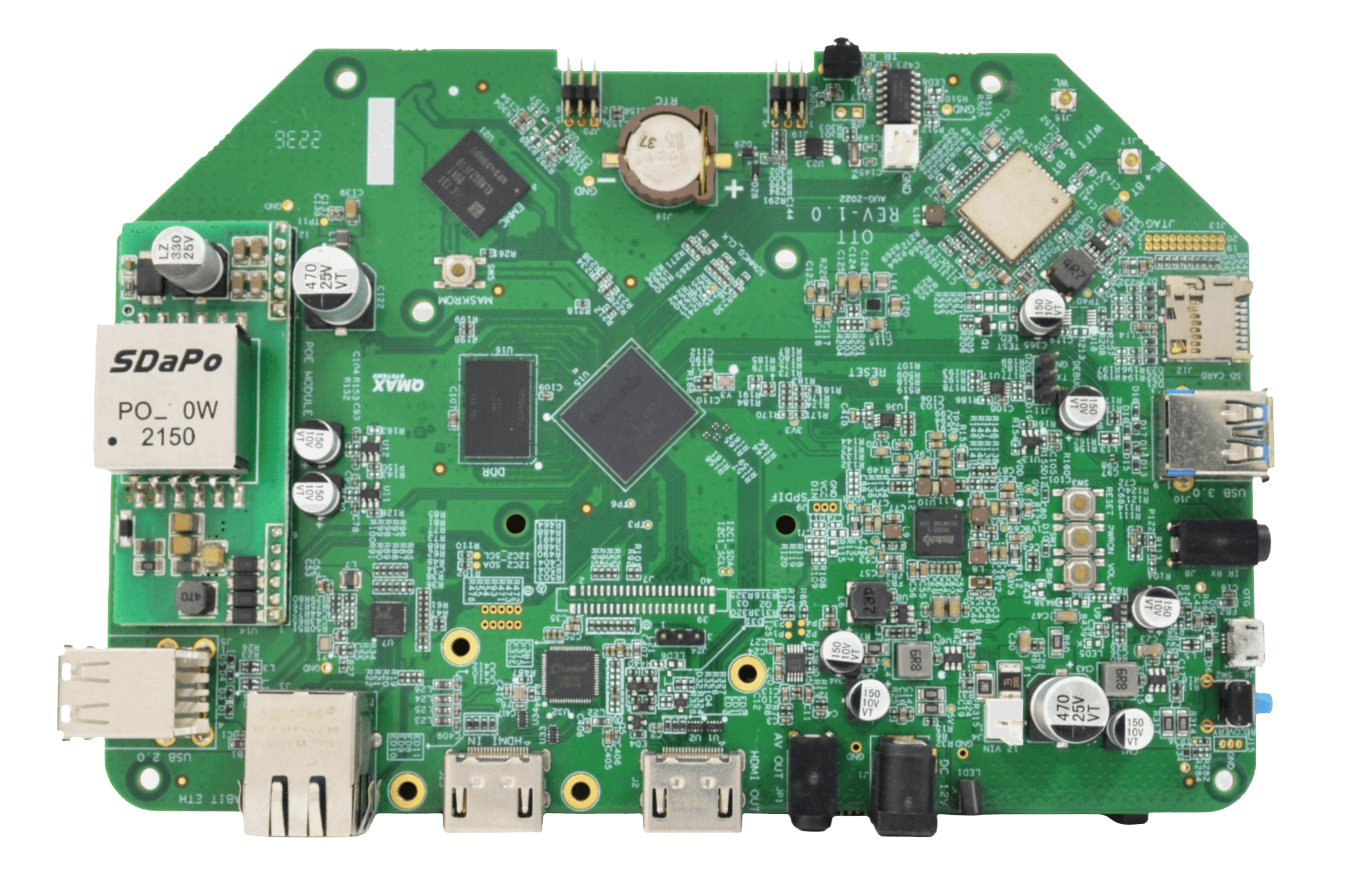
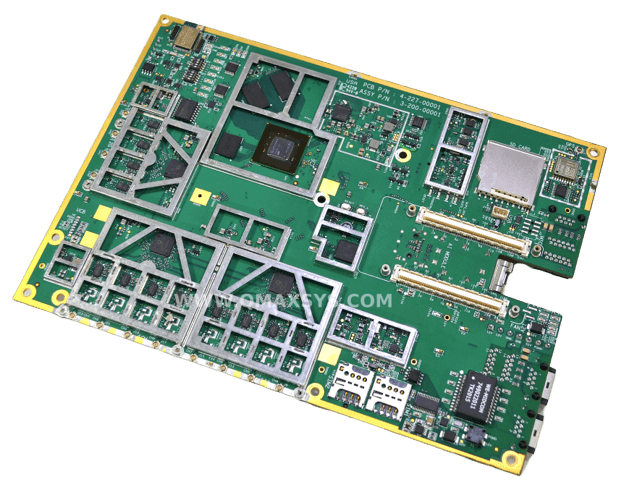
Qmax Systems designs digital hardware that scales from single-MCU boards to multi-processor systems running real-time workloads. Schematic capture, constraint-driven high-speed PCB layout, and bring-up firmware are delivered across MCU, MPU, SoC, and FPGA platforms, validated against signal-integrity and power-integrity targets on interfaces including PCIe, USB 3.x, and DDR memory. Typical applications: AI compute boards, industrial controllers, and edge-compute systems.
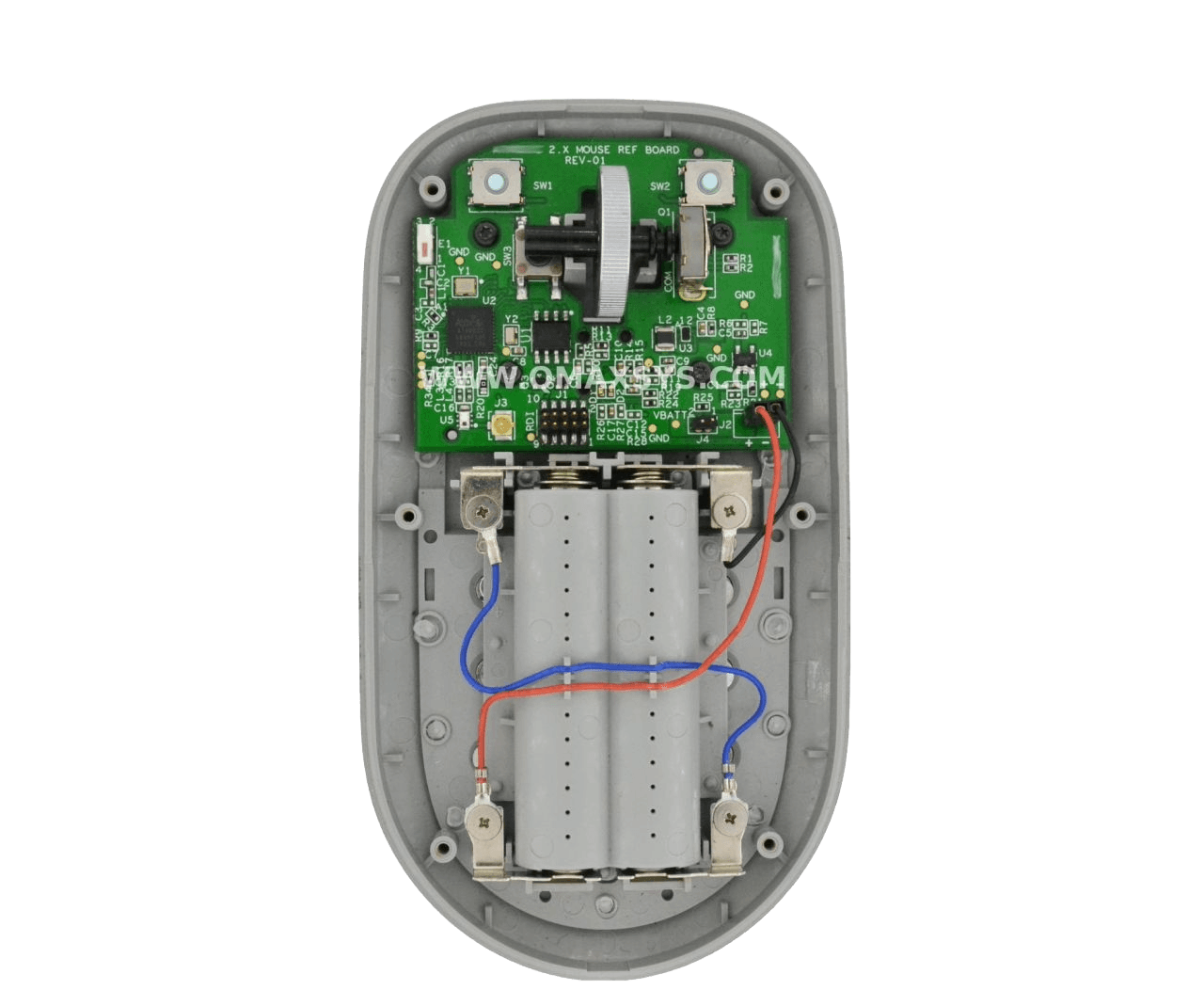
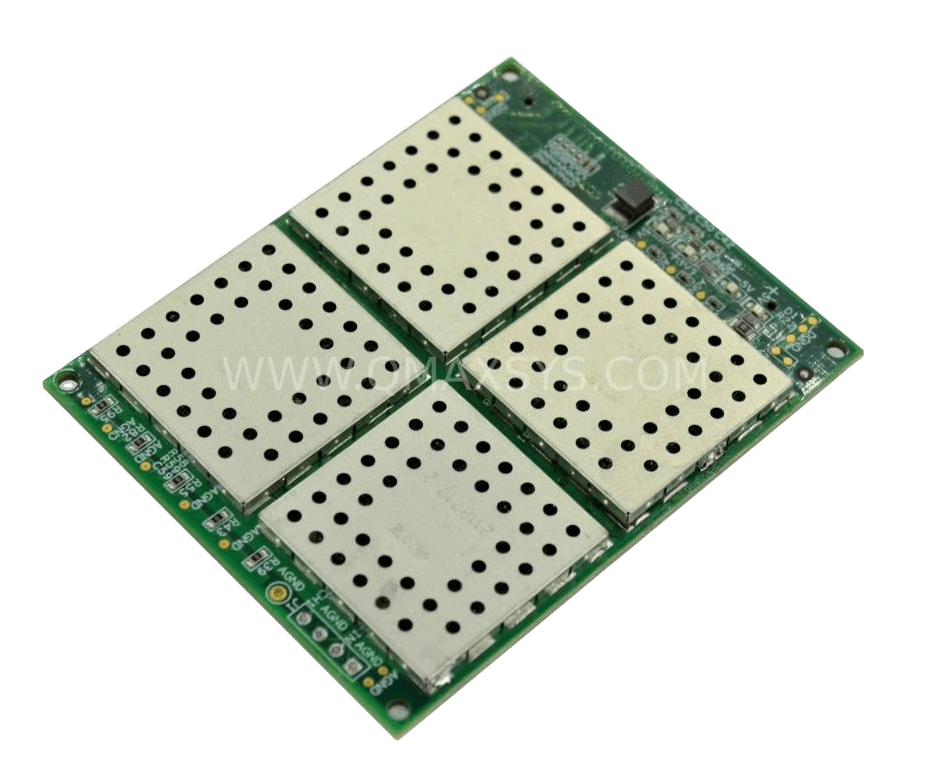
Qmax Systems validates every RF link budget on real hardware in-lab, where simulation and reality diverge. RF front-end architecture (LNA, PA, filters, matching networks), antenna integration, and EMC-aware layout are qualified across ISM, Wi-Fi, BLE, LTE, and Sub-GHz bands. Typical applications: IoT sensor nodes, wireless gateways, and connected industrial devices.
Qmax Systems builds precision analog and mixed-signal front-ends that recover clean signal from noisy environments for sensing, measurement, and control. Low-noise sensor interfaces, ADC/DAC conditioning chains, and EMI-hardened layout with disciplined grounding are integrated into a single qualified board. Typical applications: biomedical instrumentation, pressure and vibration acquisition, and optical measurement systems.
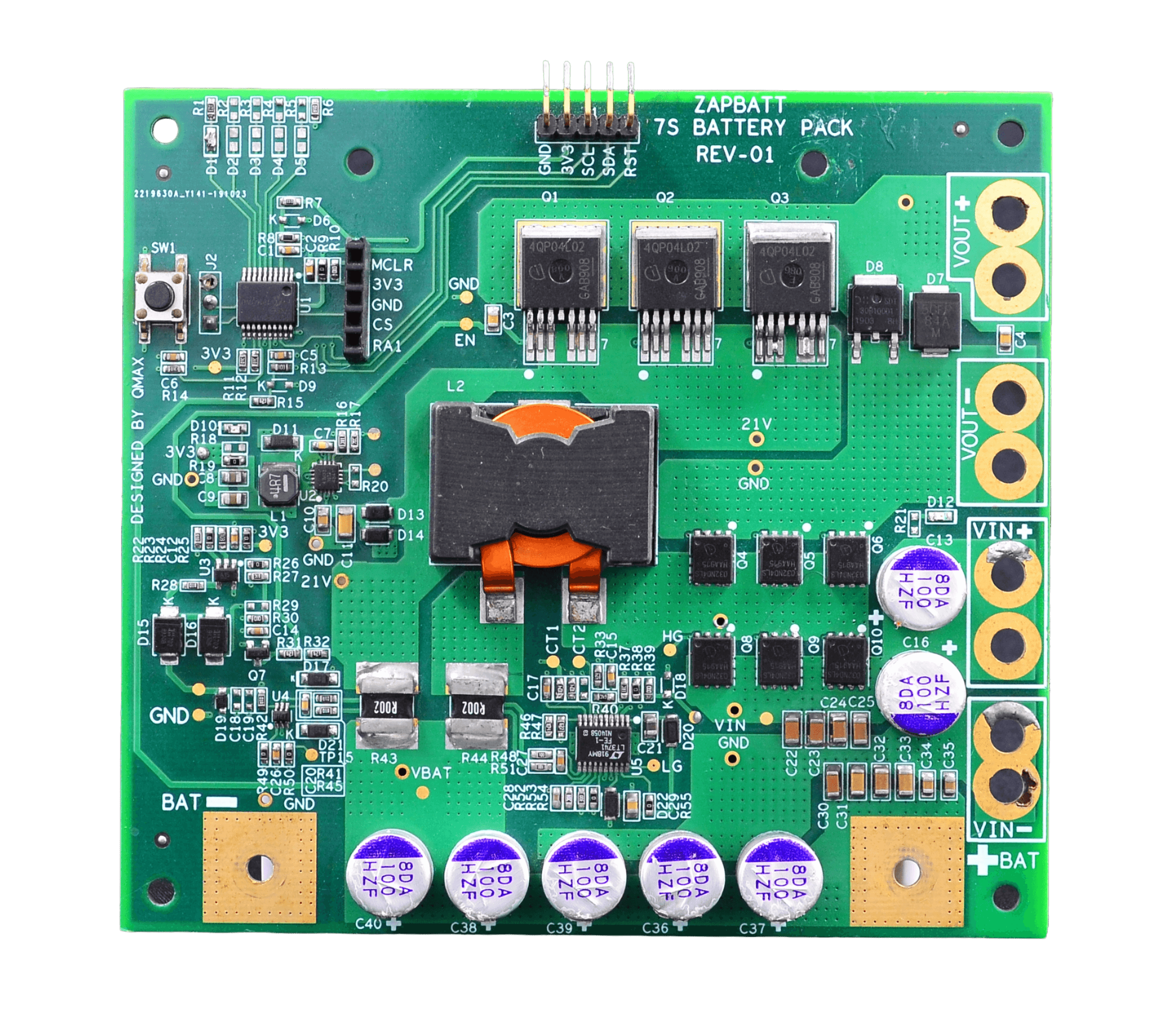
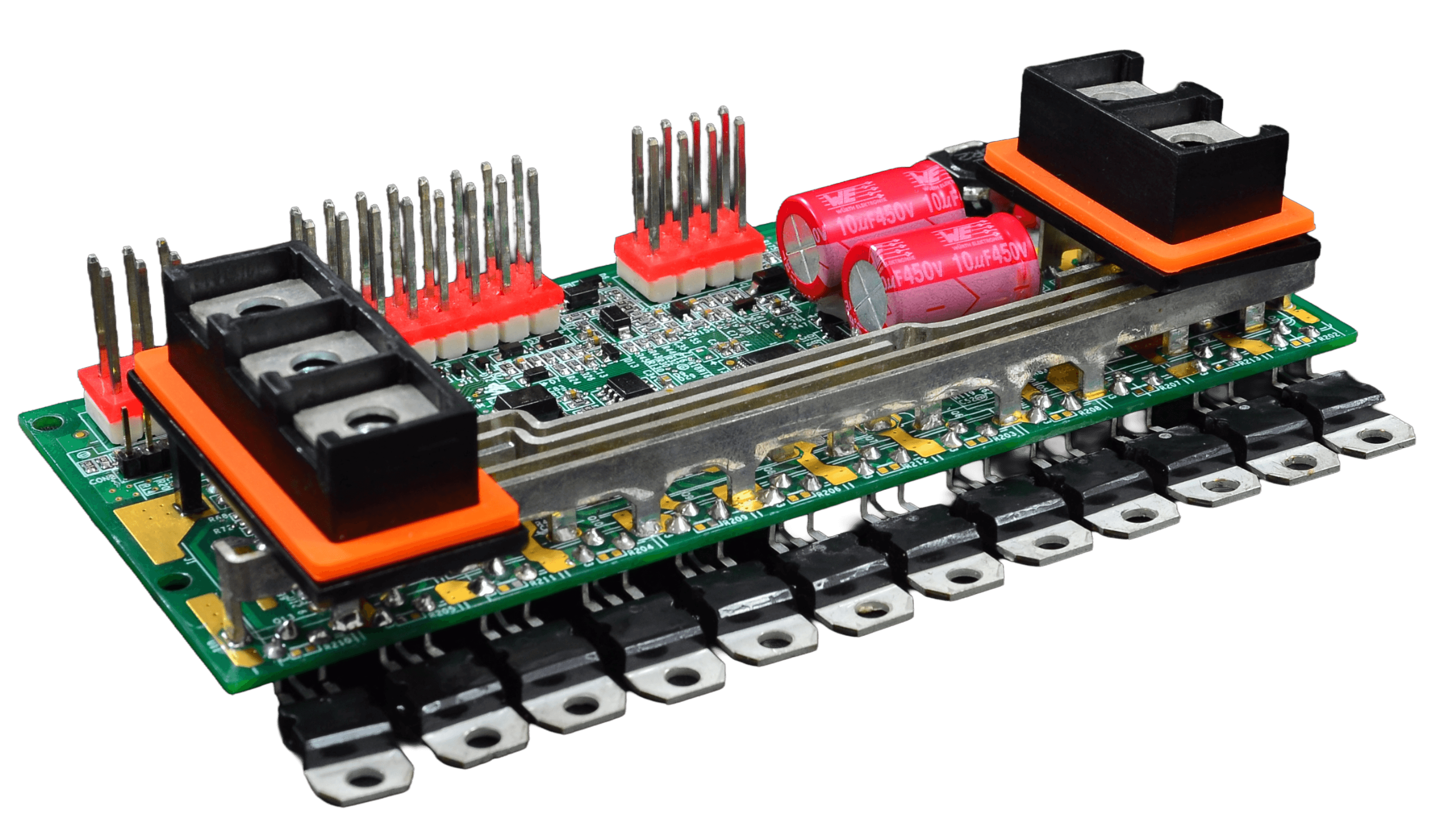
Qmax Systems designs power electronics for industrial, automotive, and energy systems where efficiency, isolation, and thermal margin are non-negotiable. AC-DC and DC-DC converters, resonant LLC/CLLC and Class-D topologies, battery management systems (BMS), and HV/HC PCBs are each verified against derating and reliability targets before sign-off. Typical applications: EV chargers, grid-tied inverters, and industrial power supplies.
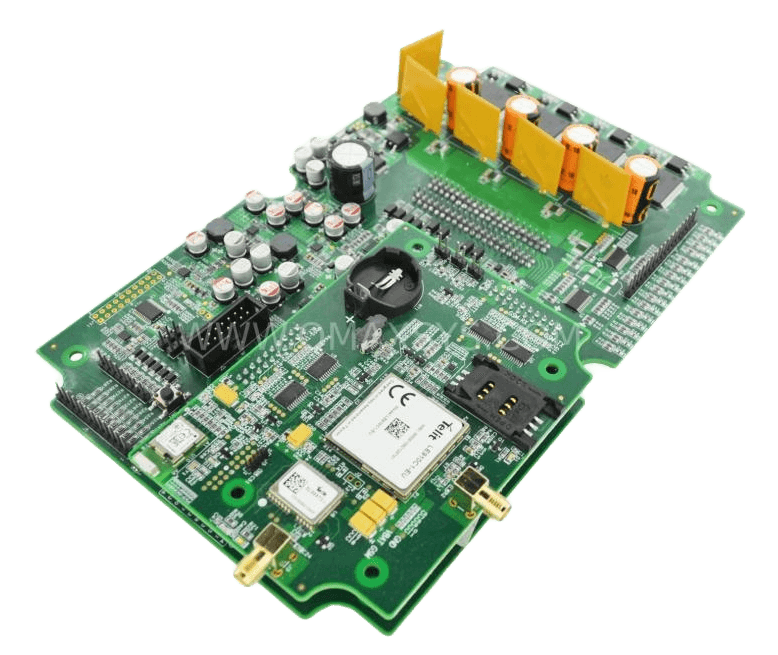
Qmax Systems designs automotive firmware for ECUs, infotainment, ADAS, and EV powertrain systems built to AEC-Q100 and IATF 16949 standards. This firmware handles harsh thermal cycling, severe vibration, and aggressive EMI across cabin, chassis, and under-the-hood applications.
From multi-layer ECU boards to high-current EV battery management systems, Qmax Systems delivers firmware designs that meet zero-defect quality and full automotive traceability.
Get a Hardware Design Quote
Every milestone, design review, and risk register is visible as it happens, because Qmax Systems program managers run a weekly cadence with traceable deliverables and on-time builds — no hidden surprises at handover.
Qmax Systems starts every program with R&D and a proof-of-concept build to retire architectural risk early — confirming feasibility, locking the BoM, and validating critical assumptions before committing a single production layer.
Rather than forcing a re-platform, Qmax Systems selects components, interfaces, and toolchains that fit your existing stack — the result is firmware that brings up cleanly, drivers that drop into your OS, and lower long-term maintenance cost.
Qmax Systems engineers average 12+ years in hardware development across automotive, medical, aerospace, and industrial domains, and only senior engineers are assigned to your design - no junior hand-offs, no learning on your timeline.
Schematic, layout, mechanical, thermal, and EMC are treated as a single coupled problem from day-one; that coherent architecture is why Qmax Systems boards survive certification on the first spin.
Qmax Systems designs for manufacturability from the first schematic, not as a late retrofit - choosing footprints, sourcing, and test points for volume production so boards move to the line without costly redesign spins.
 Questions?
With a strong focus on new product development, Qmax Systems maintains strategic partnerships with leading platform providers including Qualcomm, NXP, Nvidia, Analog Devices, onsemi, Infineon, Ambarella, Texas Instruments, Microchip, and Wolfspeed. These partnerships bring early access to upcoming silicon, roadmap visibility, and training on the latest technologies - with reference modules and evaluation kits ready to kick-start your product development.