High-Performance Digital Systems - Qmax Systems

High-Speed PCB Design DDR5, PCIe Gen6, and 112G SerDes Routing

Qmax Systems provides high-speed PCB design for 112G SerDes, DDR5, and PCIe Gen6 systems, where signal behavior is governed by physics, not connectivity alone. Qmax Systems engineers run Signal Integrity (SI) and Power Integrity (PI) simulation before routing, achieving an over-95% first-time-right rate on boards from AI GPU chassis to O-RAN Distributed Units.

Talk to Our Engineers

Our Core Service Offerings

High-speed memory and serial interfaces, routed at the edge of physics.

What we deliver

Qmax Systems designs PCB layouts for the leading edge of digital signaling - DDR5/LPDDR5, PCIe Gen5/Gen6, and 112G SerDes - validated against the tightest timing and loss budgets in the industry. Qmax's engineers route every interface against simulation-derived constraints in Cadence Sigrity and Ansys SIwave before the first net is placed. These boards ship into AI GPU chassis, O-RAN distributed units, server motherboards, and 100G network interface cards.

  • DDR5 & LPDDR5 - The DDR5/LPDDR5 interface runs DFE, CA parity, and CRC, while Qmax manages ultra-tight timing margins and on-DIMM PMIC complexity.
  • PCIe Gen5 & Gen6 - Qmax's engineers route PAM4 signaling to strict jitter and noise-floor compliance.
  • 112G SerDes - Each lane carries 112 Gbps, and full-wave simulation drives the routing to minimize reflections and crosstalk.

Typical applications: AI GPU chassis · O-RAN distributed units · Server motherboards · Network interface cards · FPGA-based imaging

Applications & Real-World Project Experience

Qmax Systems delivers field-proven expertise in developing mission-critical hardware. Our portfolio includes:

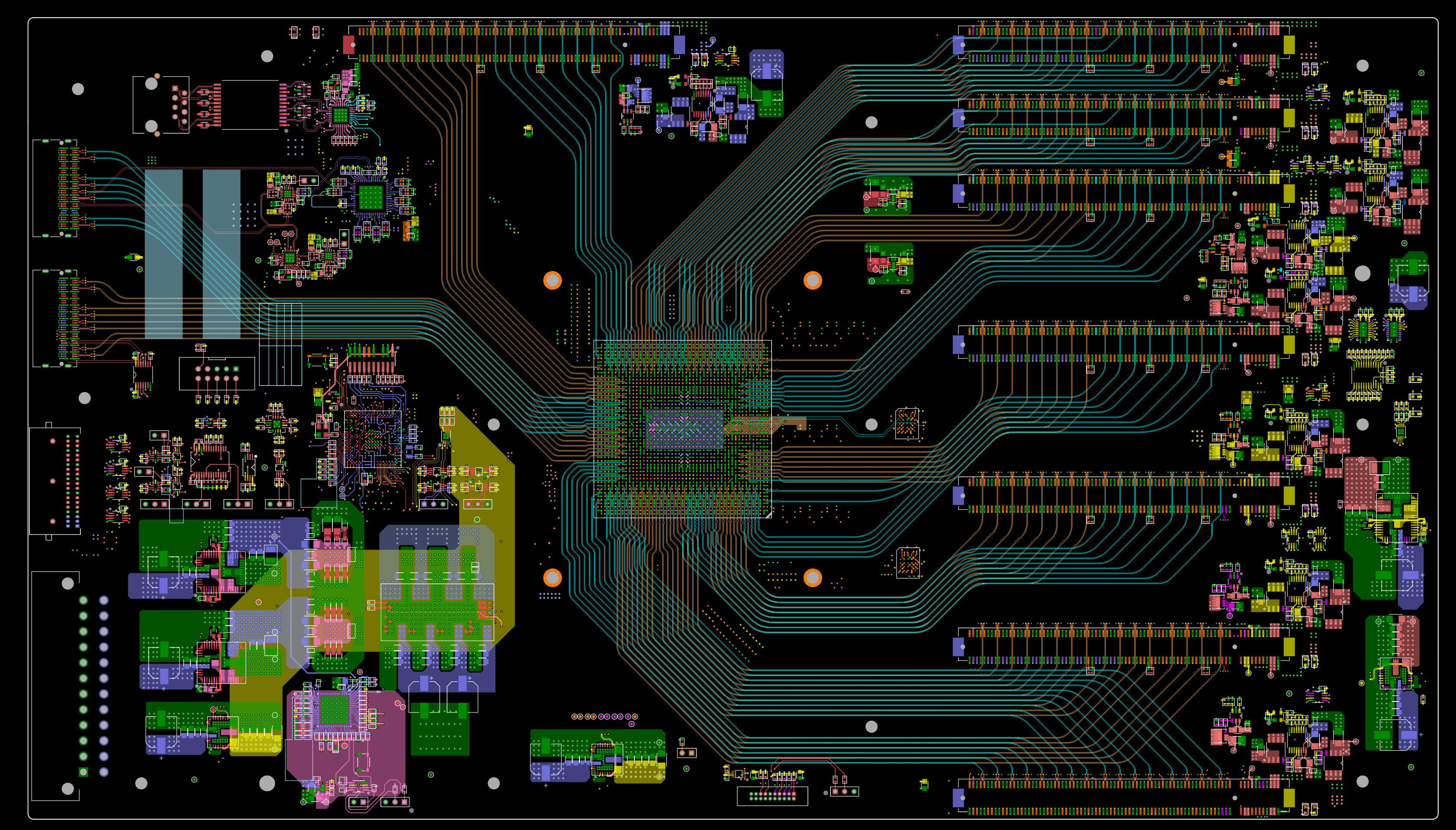
AI GPU Expansion Chassis Motherboard

AI GPU Expansion Chassis Motherboard

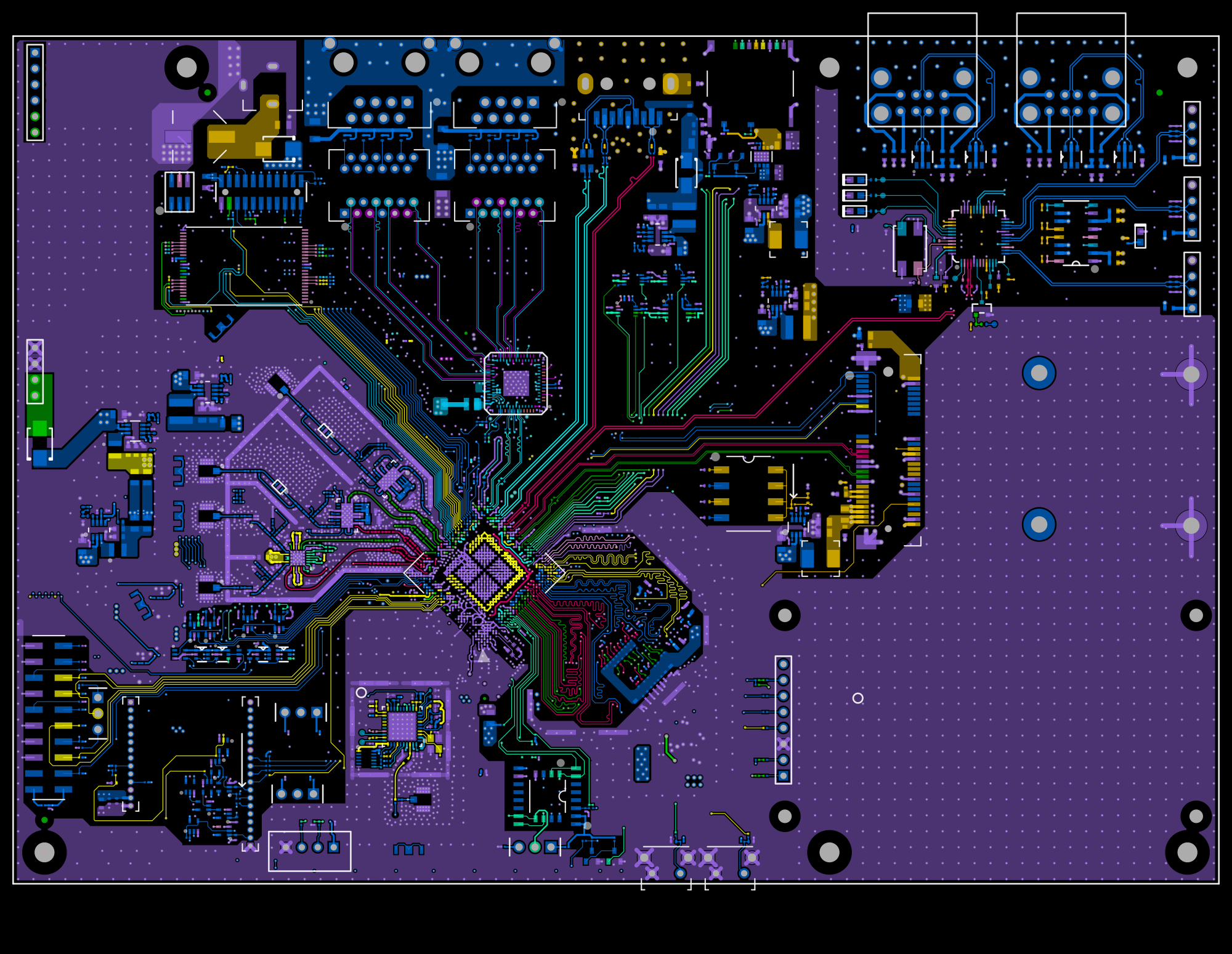
Complex multi-layer layout for AI GPU expansion chassis motherboards, featuring high pin-count BGA escape routing, HDI microvia structures, and dense interconnect for ultra-high-bandwidth PCIe fabrics.

View case study
Qualcomm WIFI 6 TriBand Router

Qualcomm WIFI 6 TriBand Router

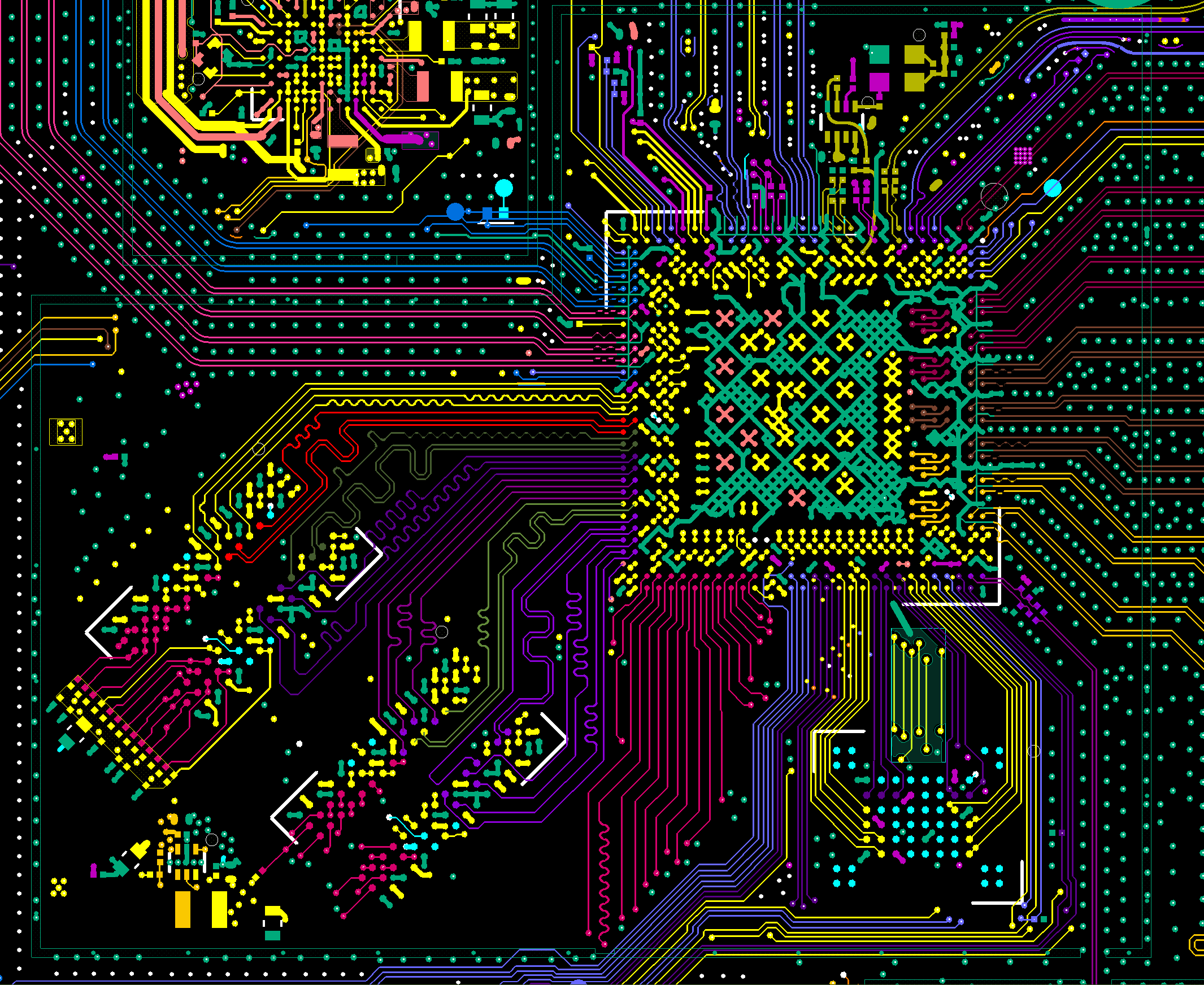
Precision single-ended and differential impedance routing on a Qualcomm WiFi 6 triband router platform, with stackup optimization for consistent 50 Ω and 100 Ω targets across all high-speed data paths.

View case study
AI GPU Expansion Chassis Motherboard

AI GPU Expansion Chassis Motherboard

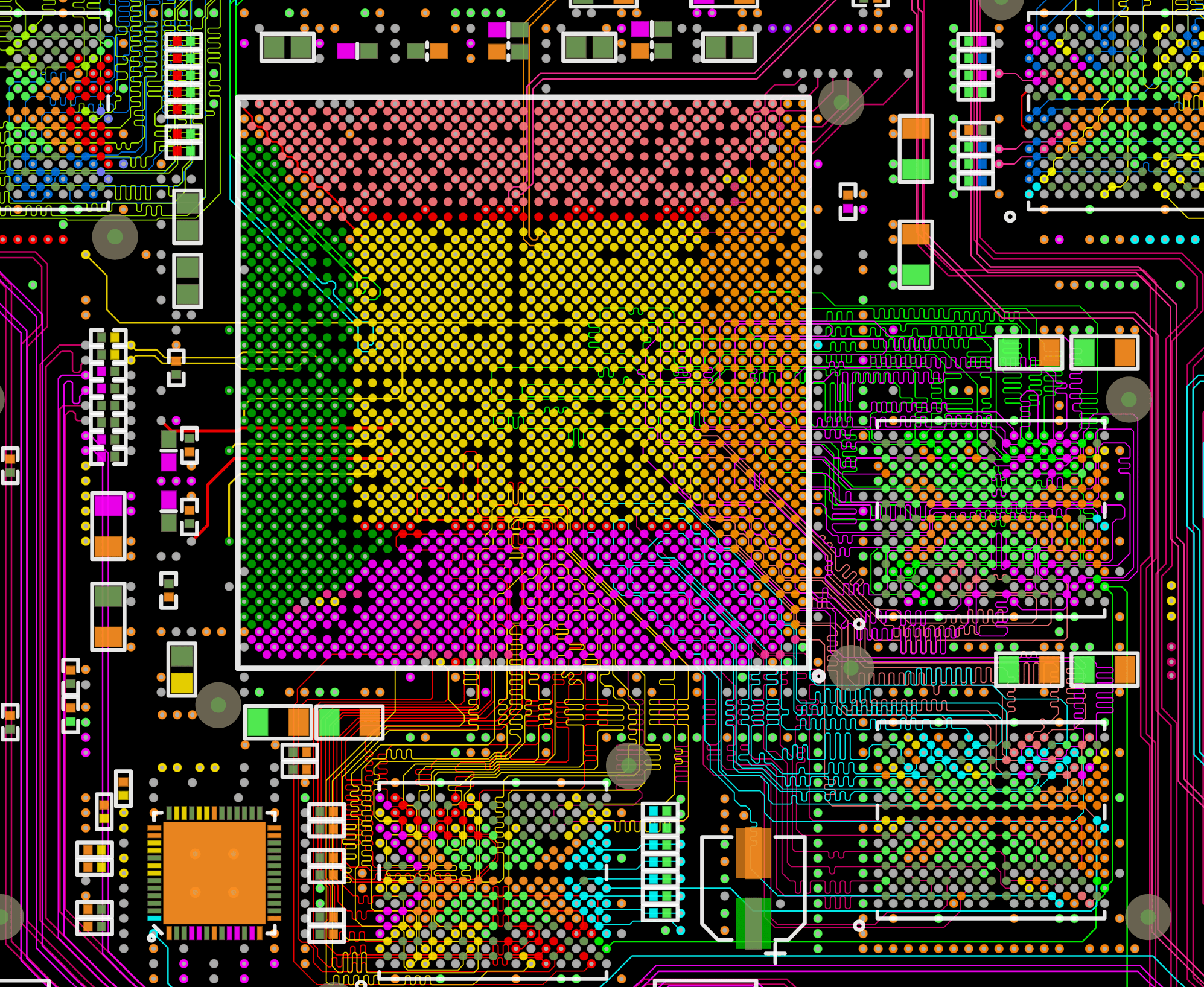
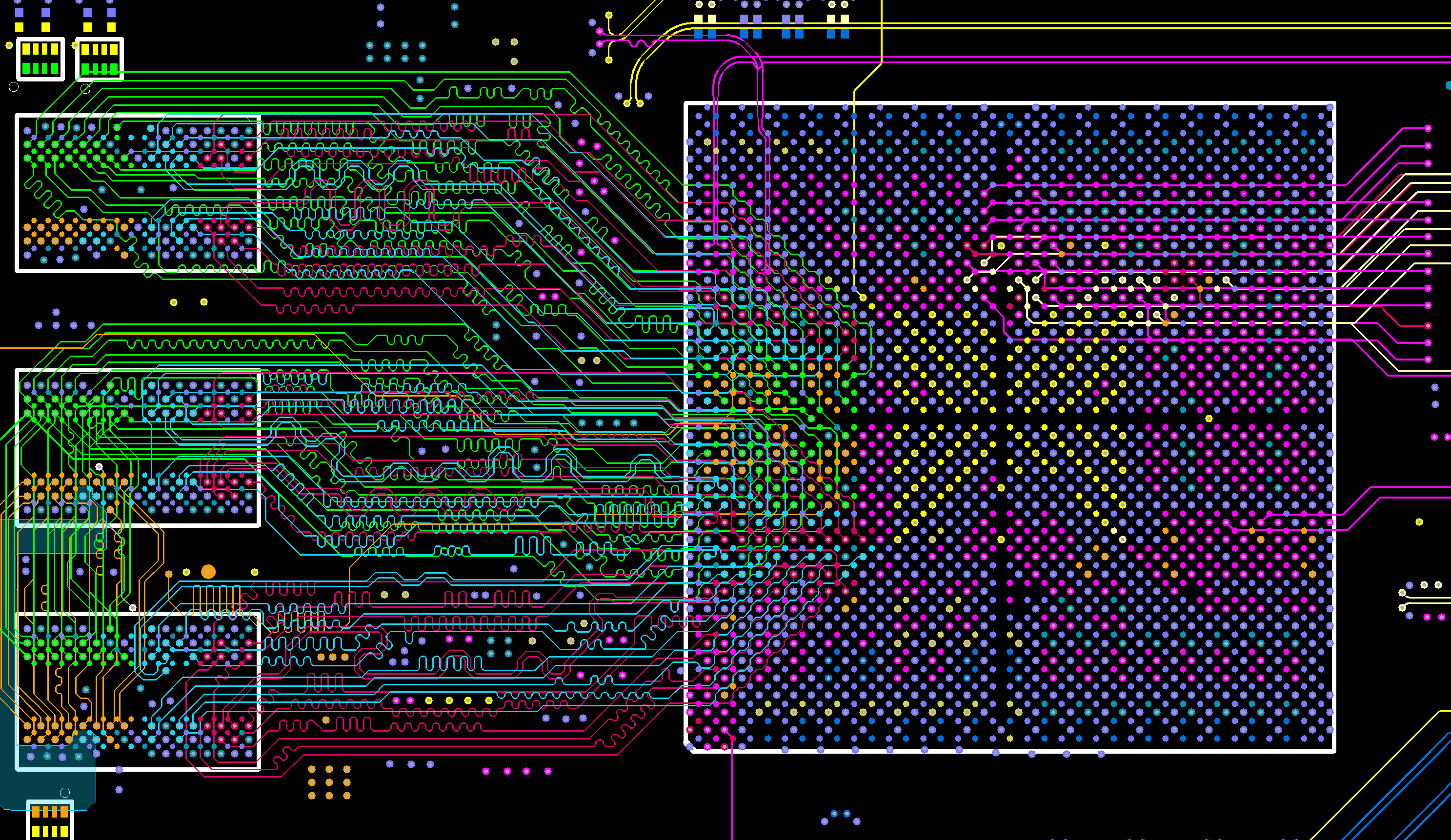
Pre- and post-layout signal integrity verification for AI GPU expansion chassis motherboards, including eye diagram analysis, TDR characterization, and crosstalk modeling for PCIe Gen6-class signaling.

View case study
Video Processor PCB

Video Processor PCB

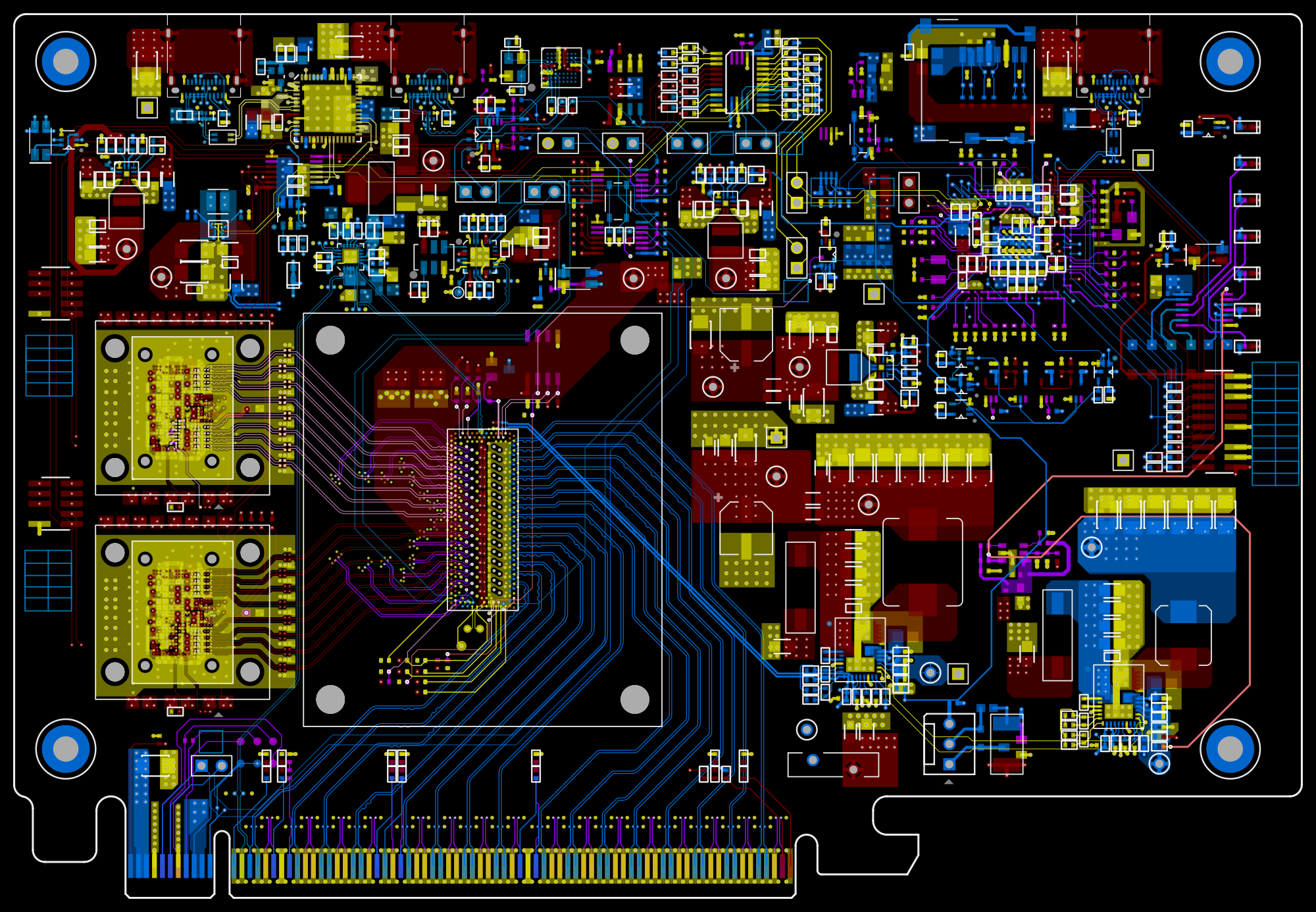
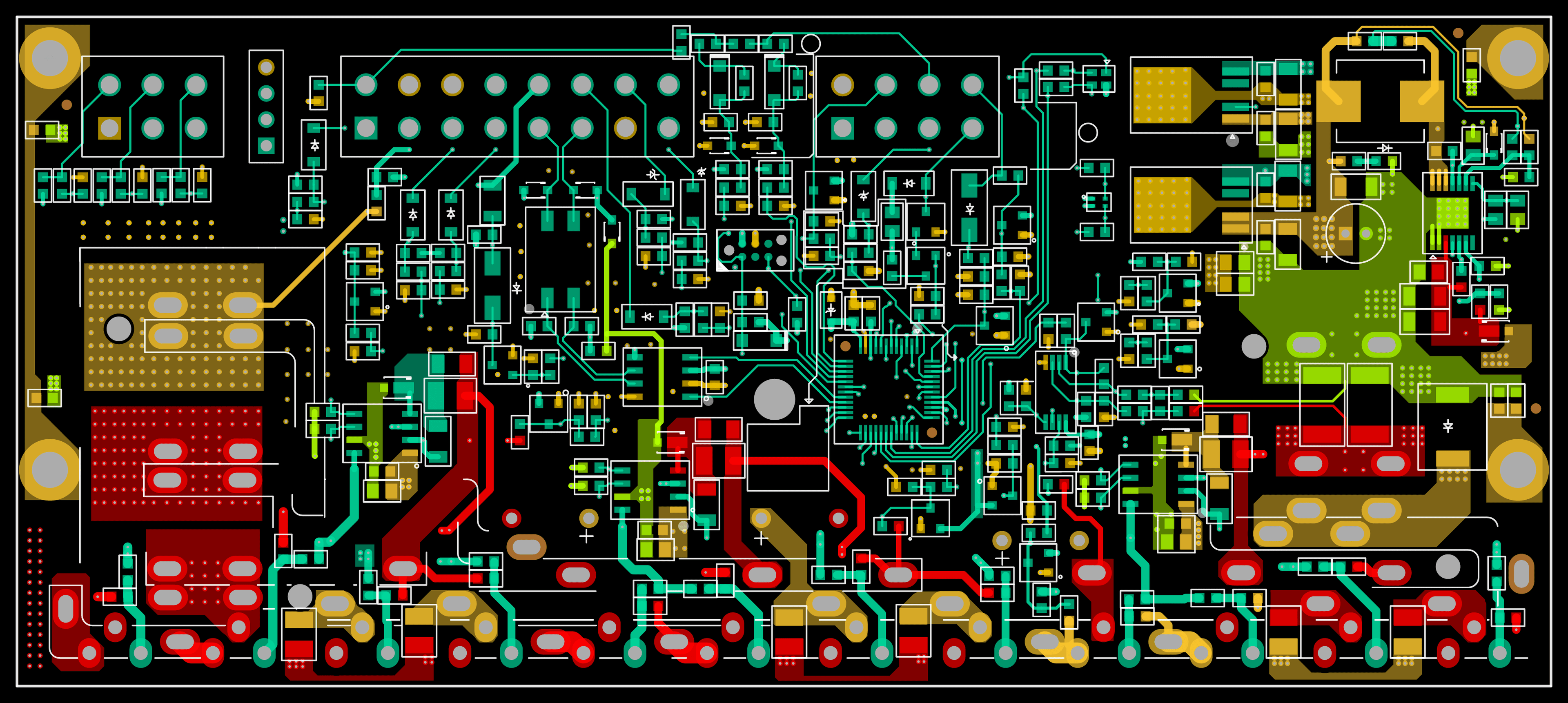
Pegasus is a high-density PCB platform designed for advanced signal routing, embedded integration, and reliable industrial-grade performance.

View case study
PCIe Gen5 CPO Board

PCIe Gen5 CPO Board

High-speed data interface PCB featuring PCIe and DDR3 connectivity with advanced signal integrity management for data-intensive applications.

View case study
Qualcomm WIFI4 Routers

Qualcomm WIFI4 Routers

Lightning is a high-speed PCB platform focused on efficient signal routing, compact integration, and reliable embedded system performance.

View case study

Why Choose Qmax Systems?

Architecture-first engineering with simulation-driven constraints - delivering high-speed digital PCBs that work on the first build.

First-Time-Right Philosophy

Qmax Systems applies architecture-first engineering with simulation-driven constraints defined before layout begins - over 95% of designs reach production without a second spin.
Engineering-Led Design

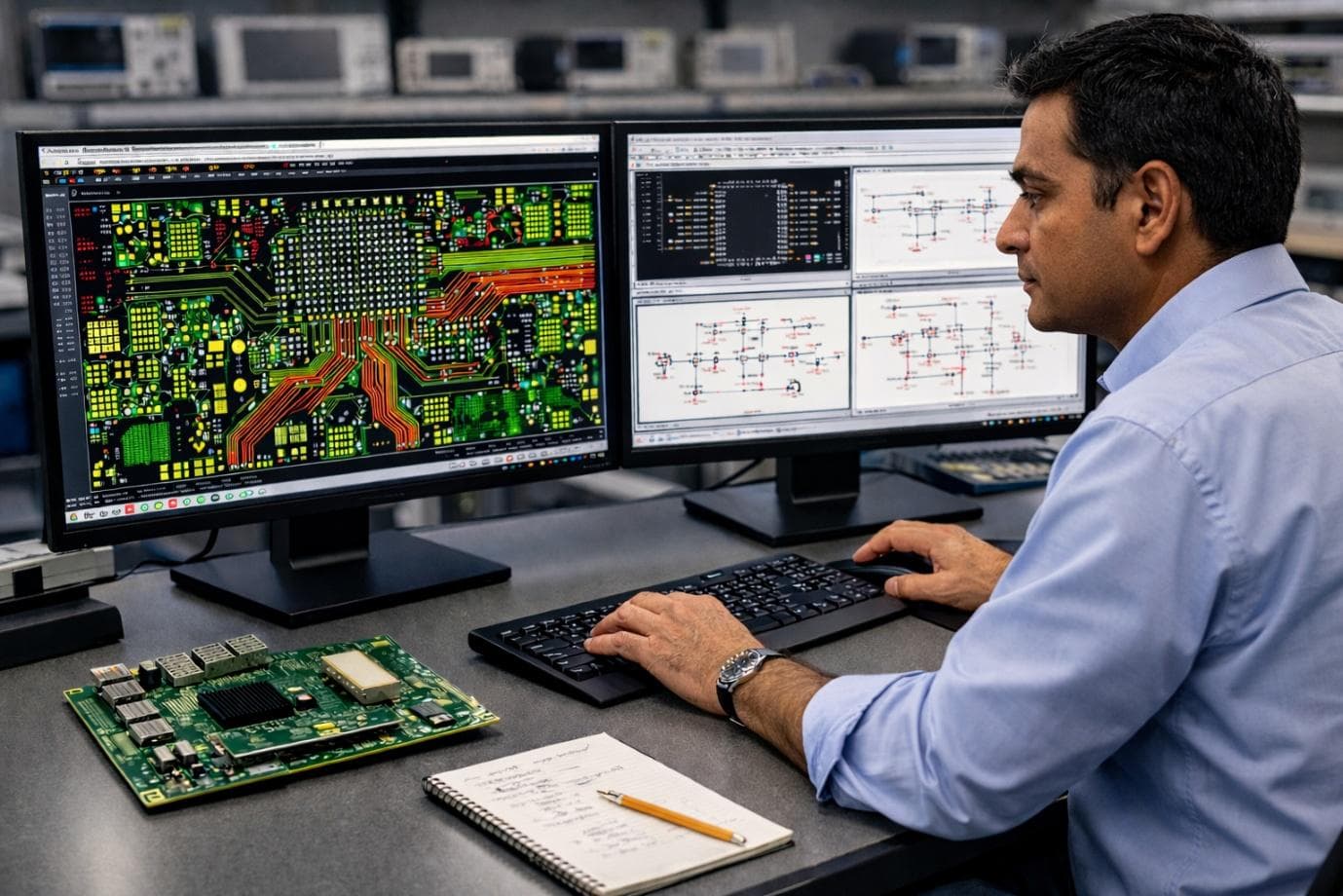
All our PCB designers are Electrical Engineers capable of performing complex circuit and noise analysis.

DFM/DFT Validation

We deliver production-ready, DFM/DFT-verified files for high first-time-right yields, tailored to each fabrication house's specific capabilities.

IP Ownership

100% customer ownership - all schematics, layout files, and simulation data remain the sole property of the customer; we retain no rights.

Manufacturing Alignment

Qmax Systems coordinates directly with Tier-1 fabrication and assembly houses for stackup and impedance alignment.

Compliance-Ready

We design for EMI/EMC (CISPR 32) and safety (UL 62368-1) from day one.

Questions? Let's Talk! Contact us. Saravanabhavan, Founder & CEOQuestions?
Let's Talk!
Contact UsSaravanabhavan
Founder & CEO

Get a Complimentary Consultation with Our High-Speed Digital PCB Experts.

1-hour session with a Qmax Systems Senior Hardware Architect. Practical, engineering-driven - no sales pitch.
Schedule Consultation

Case Studies

More Case Studies

Frequently Asked Questions

What data rates do you support?
Qmax Systems designs for data rates from DDR5-6400 (9.6 GT/s) to PCIe Gen6 (64 GT/s) and 112G SerDes (112 Gbps per lane). Our engineers cover NRZ, PAM4, and the equalization technologies required for modern high-speed serial interfaces.
Does Qmax Systems support PCIe Gen6 PCB layout?
Yes. We design PCIe Gen6 layouts, managing the transition to PAM4 signaling and tight loss budgets, with via-stub back-drilling and pad-stack optimization to hold compliance margin.
Can you design 30-layer HDI PCBs?
Yes. We regularly design 30+ layer boards with complex stacked and staggered microvia structures and ELIC (Every Layer Interconnect).
Do you provide SI/PI simulation services separately?
Yes. Qmax Systems offers standalone SI/PI analysis or simulation integrated within the layout process, using Cadence Sigrity and Ansys SIwave.
How do you mitigate crosstalk in high-density designs?
We mitigate crosstalk through rigorous 3D EM modeling and enforced 3W/5W spacing rules and guard traces, validated by full-wave extraction before fabrication.
Which EDA tools do you use?
Qmax Systems primarily uses Cadence Allegro/OrCAD, Altium Designer, and Mentor Xpedition, with Cadence Sigrity and Ansys SIwave for SI/PI simulation.
What is a "simulation-driven" constraint?
A simulation-driven constraint means we run SI simulations to determine the exact routing rules - trace width, gap, and length - before layout begins, rather than guessing and checking.
Do you provide DFM reports?
Yes. We run a comprehensive DFM/DFT check on every design to ensure high manufacturing yields and production-ready output.
Can you help with component obsolescence?
Yes. During schematic review, Qmax Systems engineers identify at-risk parts and recommend pin-compatible or functional alternatives, screening for EOL across long-lifecycle programs.
What is your experience with 112G SerDes?
We have designed 112G PAM4 interfaces, focusing on via-stub removal (back-drilling) and pad-stack optimization to minimize reflections at 112 Gbps per lane.
Do you support 100G Ethernet NIC design?
Yes. We have designed multi-port 100G NICs in QSFP-DD and OSFP form factors.
What materials do you recommend for high-speed digital PCBs?
We typically specify Megtron 6/7, Isola I-Tera, or Rogers 4350B/4003C, selected by operating frequency and budget.
How do you handle high-current PDNs?
We use PI simulation to map DC IR drop and confirm copper density meets thermal and electrical requirements across the power delivery network.
Is Qmax Systems an Indian PCB design company?
Yes. Qmax Systems is a leading high-speed digital PCB design services provider based in India, serving global clients.
Do you design server motherboards?
Yes. We design multi-processor server motherboards for Intel, AMD, and ARM architectures.
What is your first-time-right ratio?
Over 95% of our high-speed designs move to production without requiring a second spin for electrical issues.
Can you design O-RAN hardware?
Yes. We have specific experience designing O-RAN Radio Units (RU) and Distributed Units (DU).
Do you manage the fabrication process?
Qmax Systems coordinates directly with your preferred fab house or recommends one from our audited Tier-1 partner list, aligning stackup and impedance targets.
What is back-drilling, and when do you use it?
Back-drilling removes unused via stubs to prevent signal reflections. We apply it to signals above 10 Gbps, including PCIe Gen6 and 112G SerDes routing.
Do you support USB4 design?
Yes. We design USB4 routing for 40 Gbps throughput with Type-C Power Delivery (PD) integration.
How do you minimize EMI?
We minimize EMI through disciplined ground-plane referencing, shielding, and balanced routing to suppress common-mode noise, validated against CISPR 32.
What is ELIC, and do you use it?
ELIC (Every Layer Interconnect) is an HDI technology where any layer connects to any other using stacked copper-filled microvias. We use ELIC in our 30+ layer HDI designs.
Does Qmax Systems provide the source files?
Yes. All design IP - source schematics, layout files, and simulation models - belongs to the customer; Qmax Systems retains no ownership.
How do you handle differential pair skew?
We apply serpentine trace compensation and phase-matching at the point of mismatch, plus spread-glass fabrics to mitigate fiber-weave skew.
Can you design AI GPU chassis PCBs?
Yes. We specialize in the high-speed backplanes and switch boards required for AI GPU clusters, including PCIe Gen6-class fabrics.
What is a PDN impedance profile, and how do you use it?
A PDN impedance profile plots the power network's impedance versus frequency. We design the PDN to stay below target impedance across the band to prevent noise.
Do you support NXP i.MX8 designs?
Yes. Qmax Systems has extensive experience with the NXP i.MX8 family and its LPDDR4 memory routing requirements.
What are fiber weave effects, and how do you mitigate them?
Fiber weave effects are dielectric-constant variations caused by the glass/resin pattern. We mitigate them with angled (zig-zag) routing and spread-glass fabric styles.
Do you offer thermal simulation?
Yes. We perform thermal analysis to identify hotspots and optimize heatsink and fan placement.
How do I get started?
Book a 1-hour complimentary engineering consultation with a Qmax Systems Senior Hardware Architect via our website.