Power Electronics PCB Design - Qmax Systems

Power Electronics PCB Design High-Current, High-Voltage Board Layout

Qmax Systems provides power electronics PCB design as functional circuit elements, balancing high-current density, extreme voltage gradients, and rapid switching transients (di/dt and dv/dt). A First-Time-Right methodology - front-loading electromagnetic and thermal risk analysis - takes 800V EV architectures and kW-level plasma generators to production without costly re-spins.

Talk to Our Engineers

Our Core Service Offerings

Heavy copper and busbar integration for extreme current demands.

What we deliver

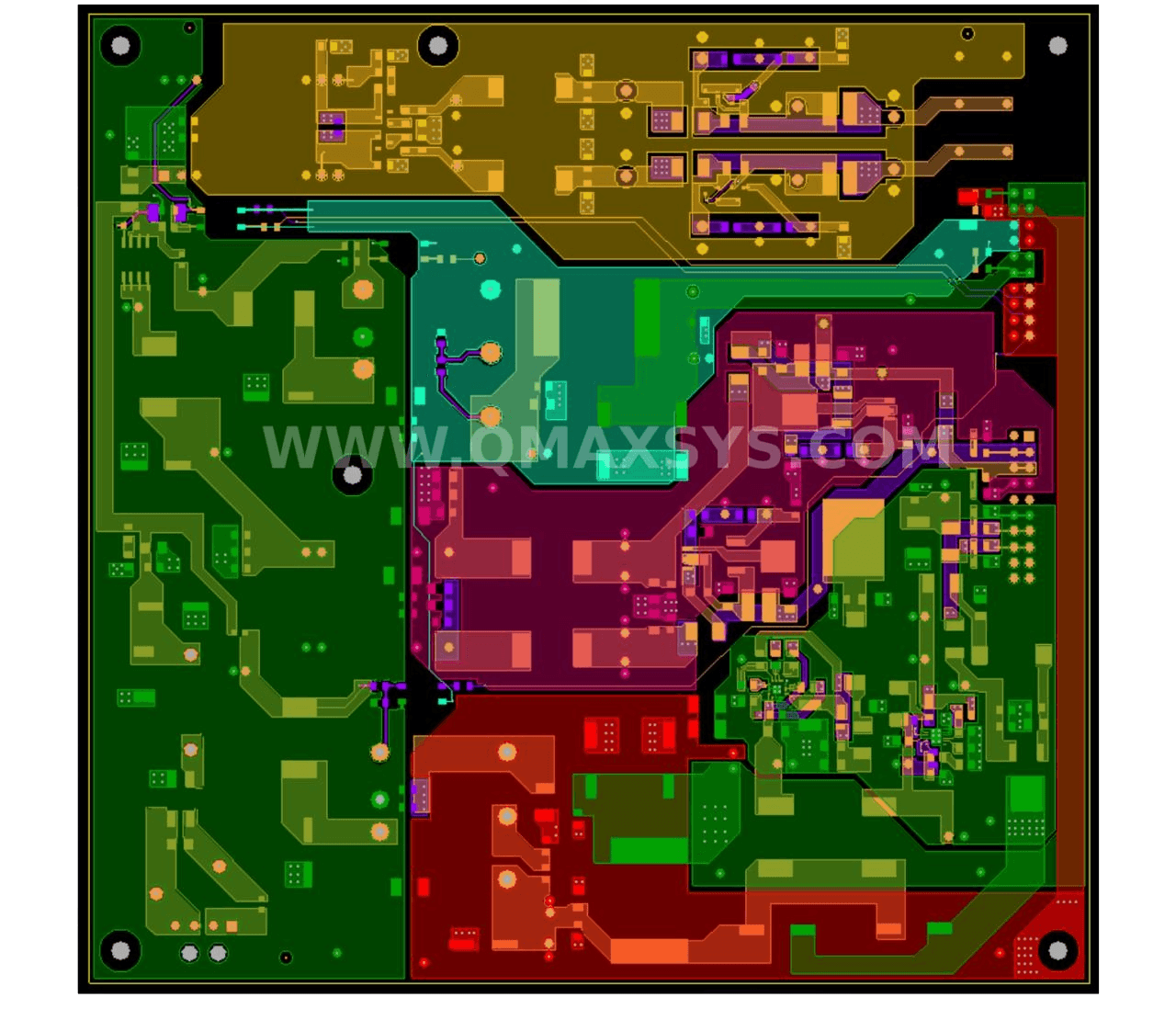
Qmax Systems designs power circuits for environments where parasitic inductance and thermal bottlenecks can compromise the entire system. Qmax's engineers build heavy-copper stackups (4oz–14oz+), embedded and laminated busbar structures, and balanced parallel-MOSFET routing to carry 1000A+ DC without hotspots. These designs go into EV inverters, industrial motor drives, DC-DC converters, welding equipment, and UPS systems.

  • Heavy Copper PCBs (4oz to 14oz+) - Qmax builds purpose-built stackups for high-current bus bars and power planes handling 1000A+ DC sources.
  • Busbar Integration - Embedded and laminated busbar structures form ultra-low-inductance current paths in inverter and converter stages.
  • Current Sharing & Balancing - Symmetric trace routing and copper balancing prevent hotspots in parallel-MOSFET configurations.

Typical applications: EV inverters · Industrial motor drives · DC-DC converters · Welding equipment · UPS systems

Applications & Real-World Project Experience

Qmax Systems delivers field-proven expertise in developing mission-critical hardware. Our portfolio includes:

BMS Controller

BMS Controller

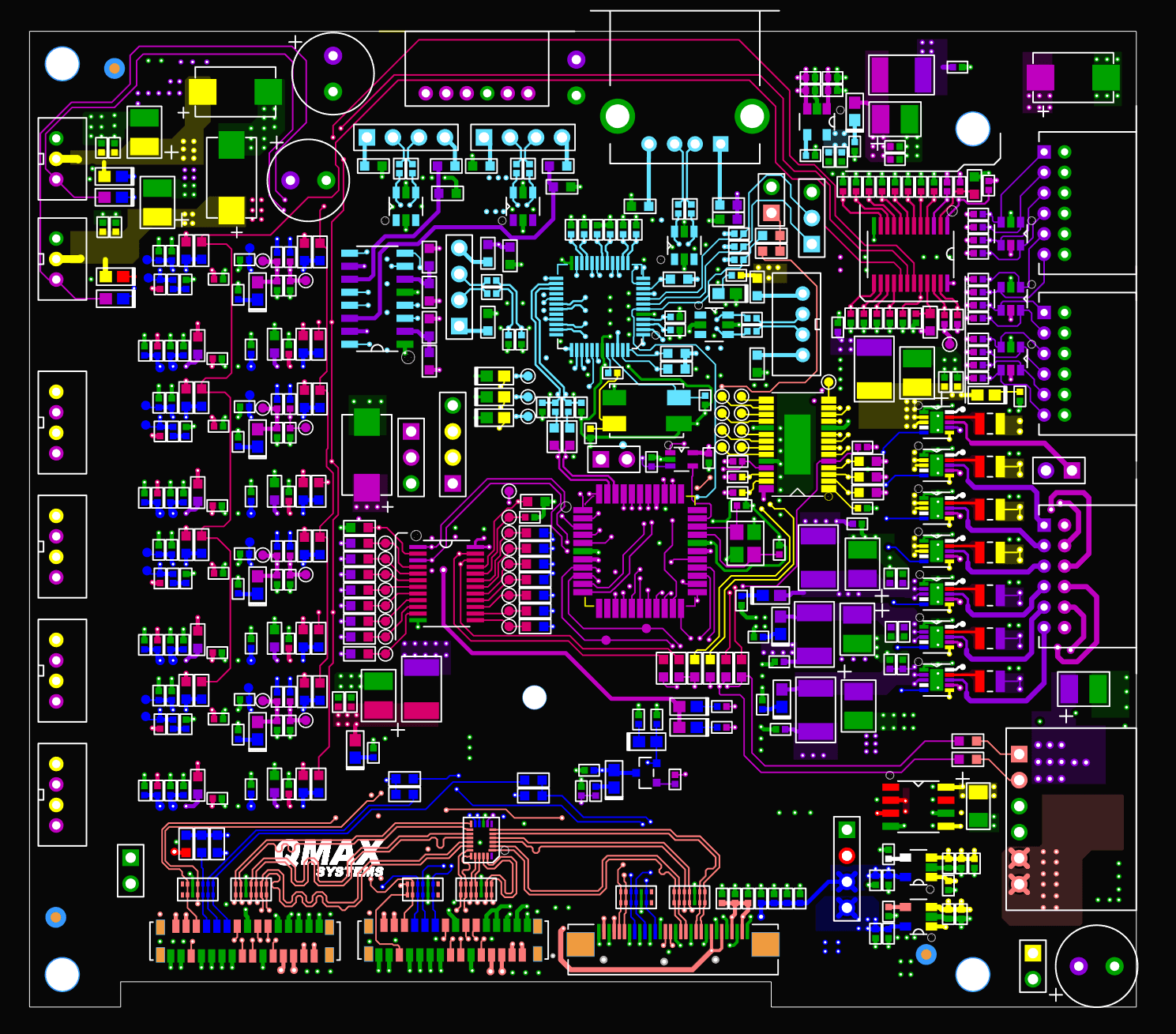
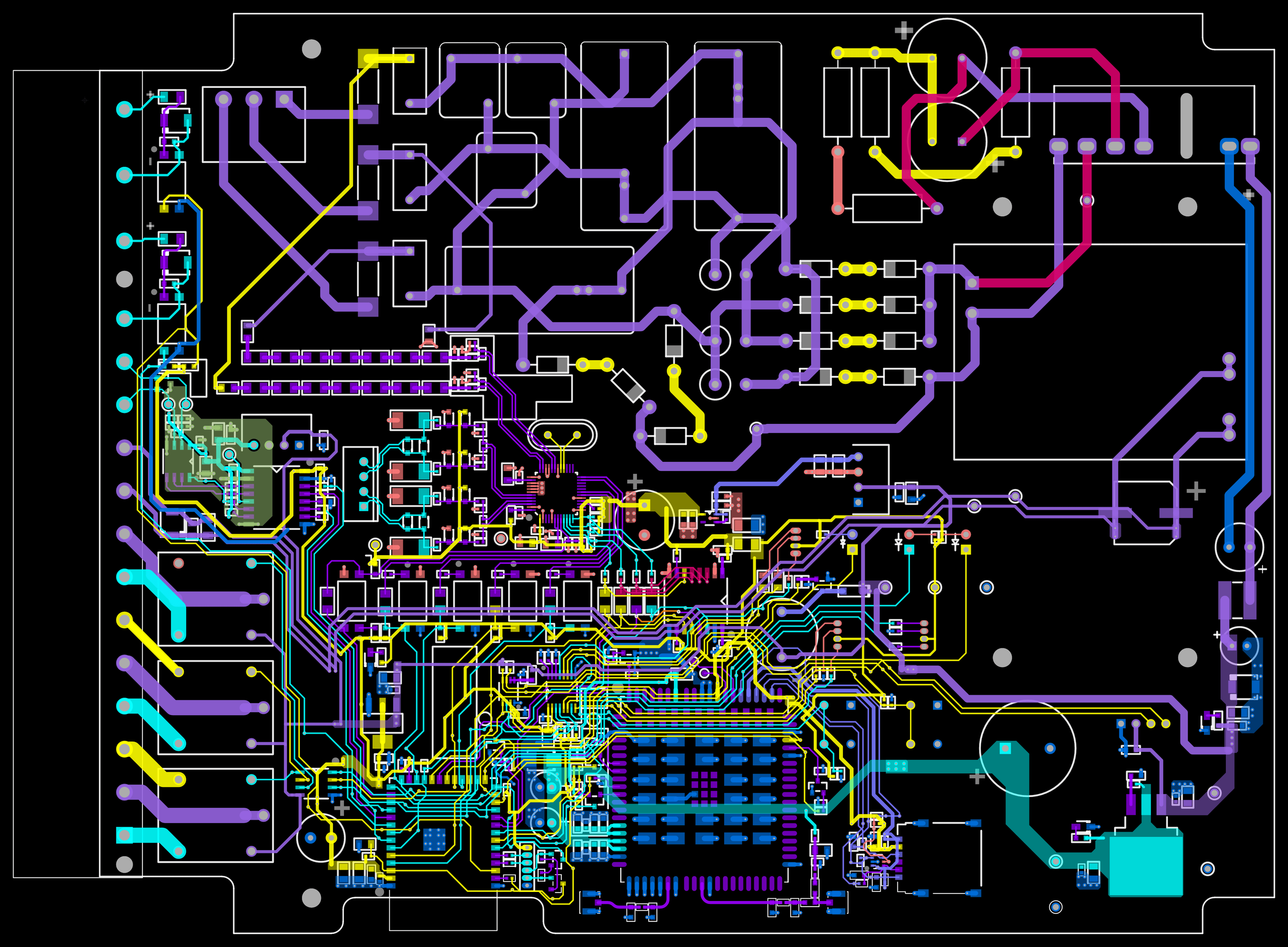
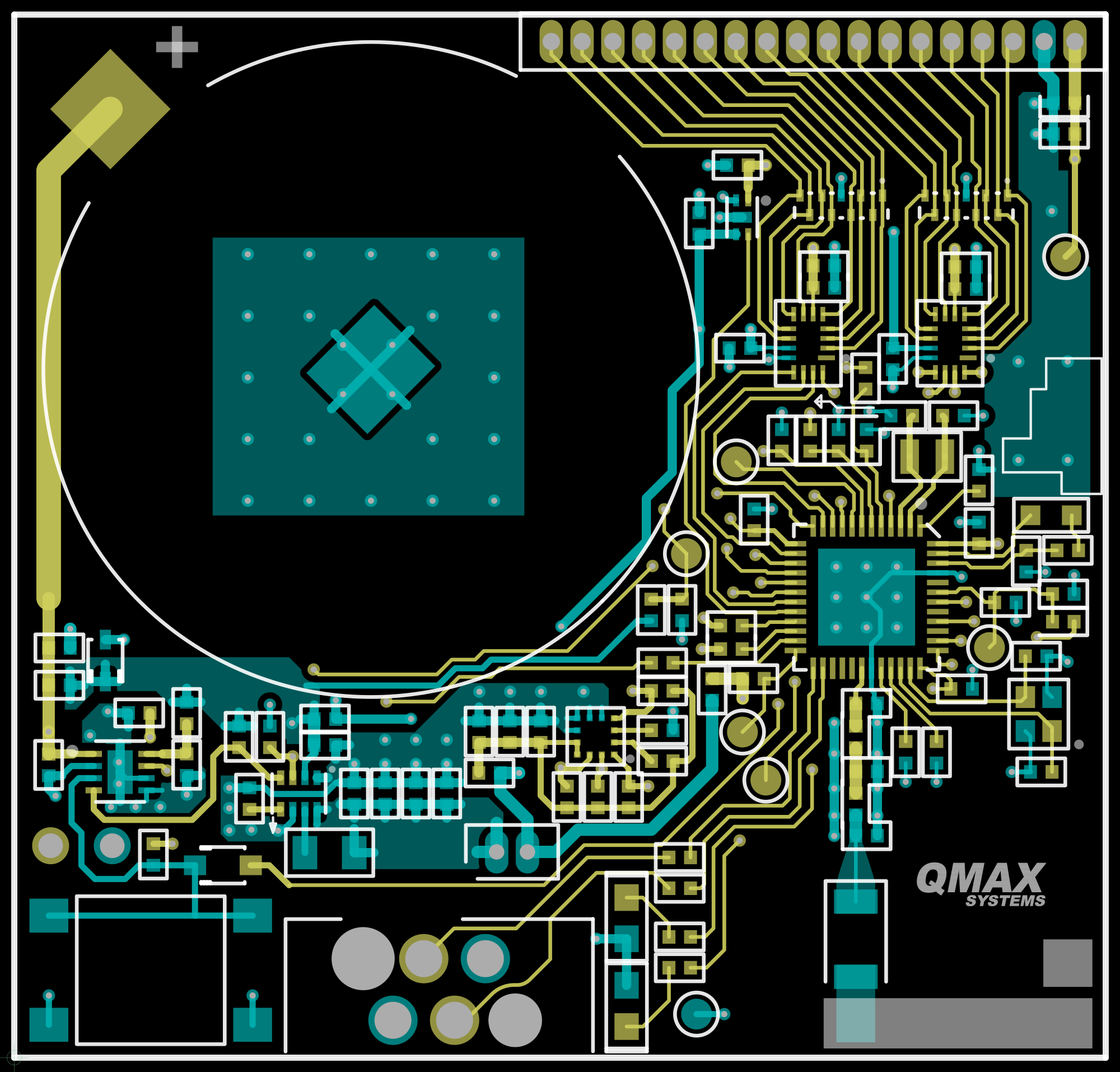
BMS controller PCB with high-current power distribution, heavy copper routing, and thermal-aware layout for battery pack monitoring and cell balancing under sustained load.

View case study
Portable EV Charger

Portable EV Charger

A dedicated embedded power board engineered for efficient power distribution, thermal performance, and reliable operation across complex embedded systems.

View case study
Thermal Analysis and Management

Thermal Analysis and Management

Industrial thermal management system for real-time heat monitoring, predictive analysis, and automated cooling control to improve reliability and operational efficiency.

View case study
100GbE High-Speed Networking Board

100GbE High-Speed Networking Board

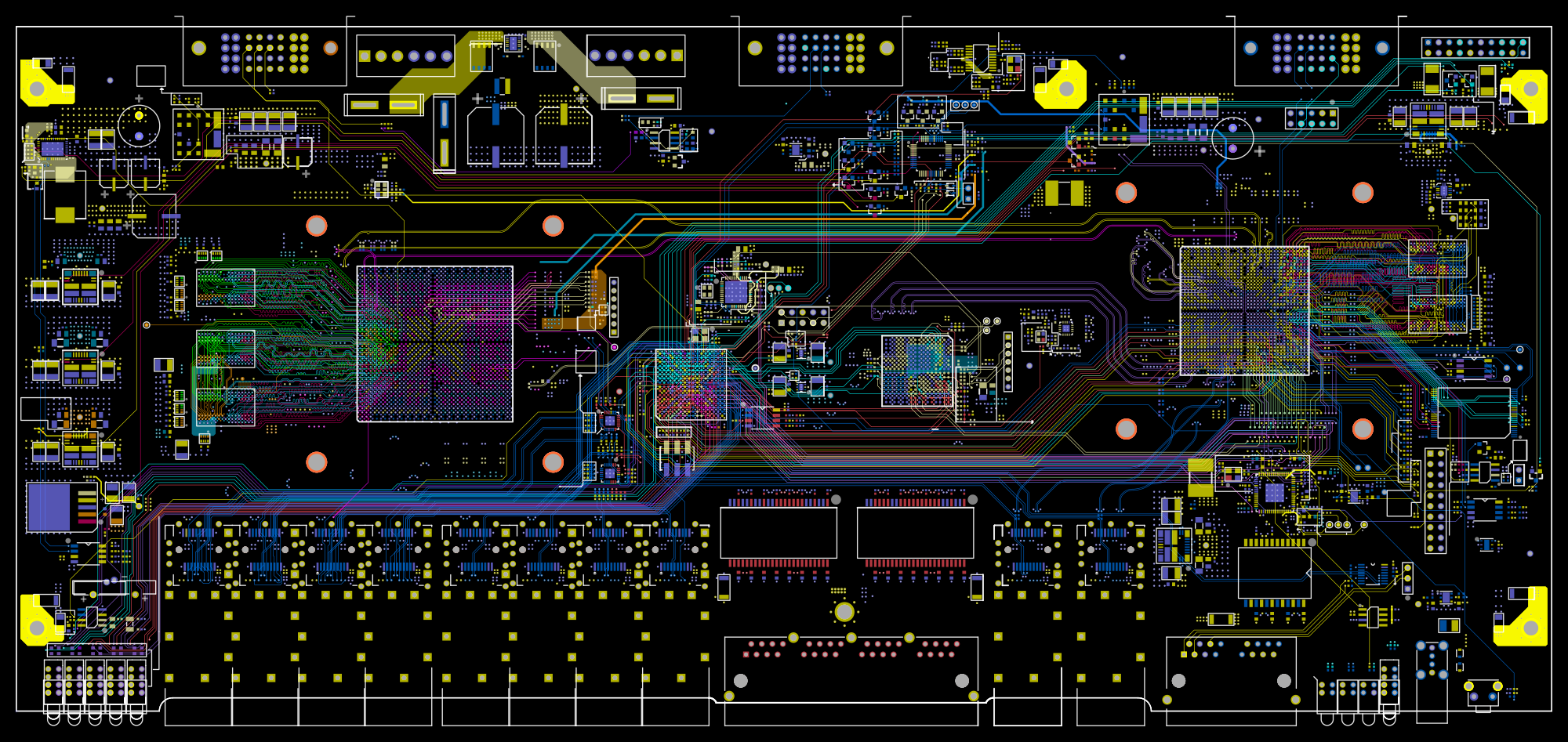
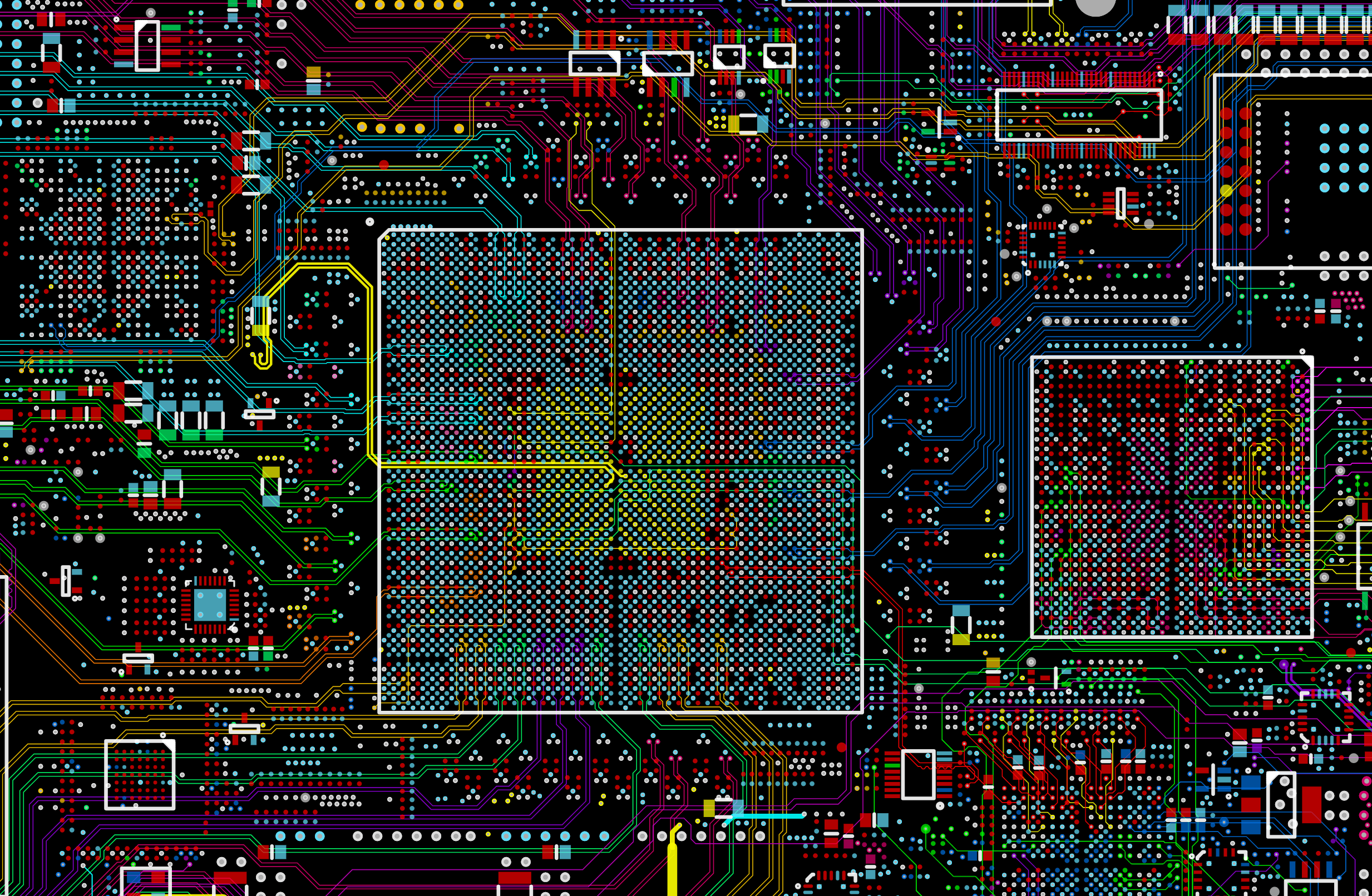
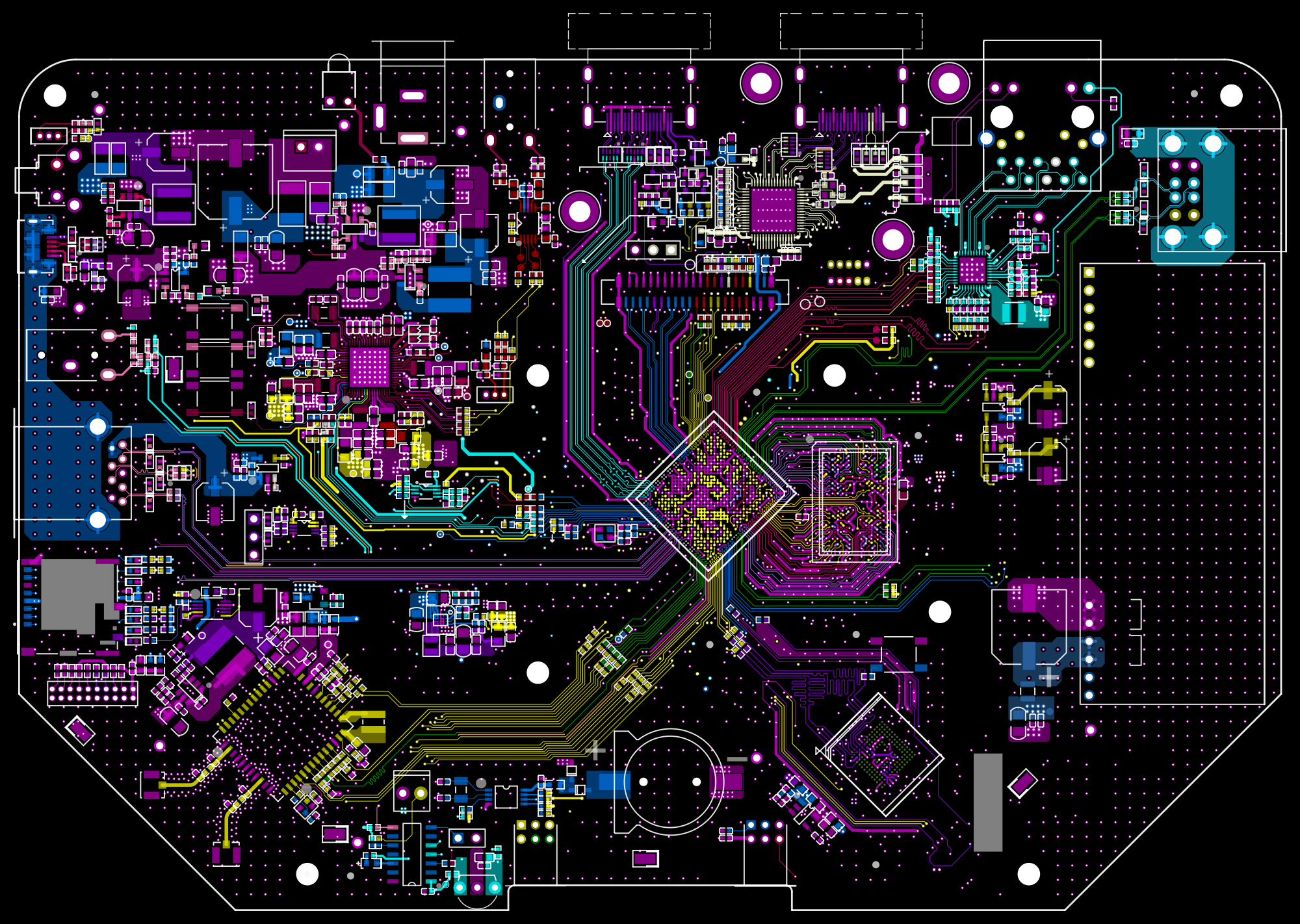
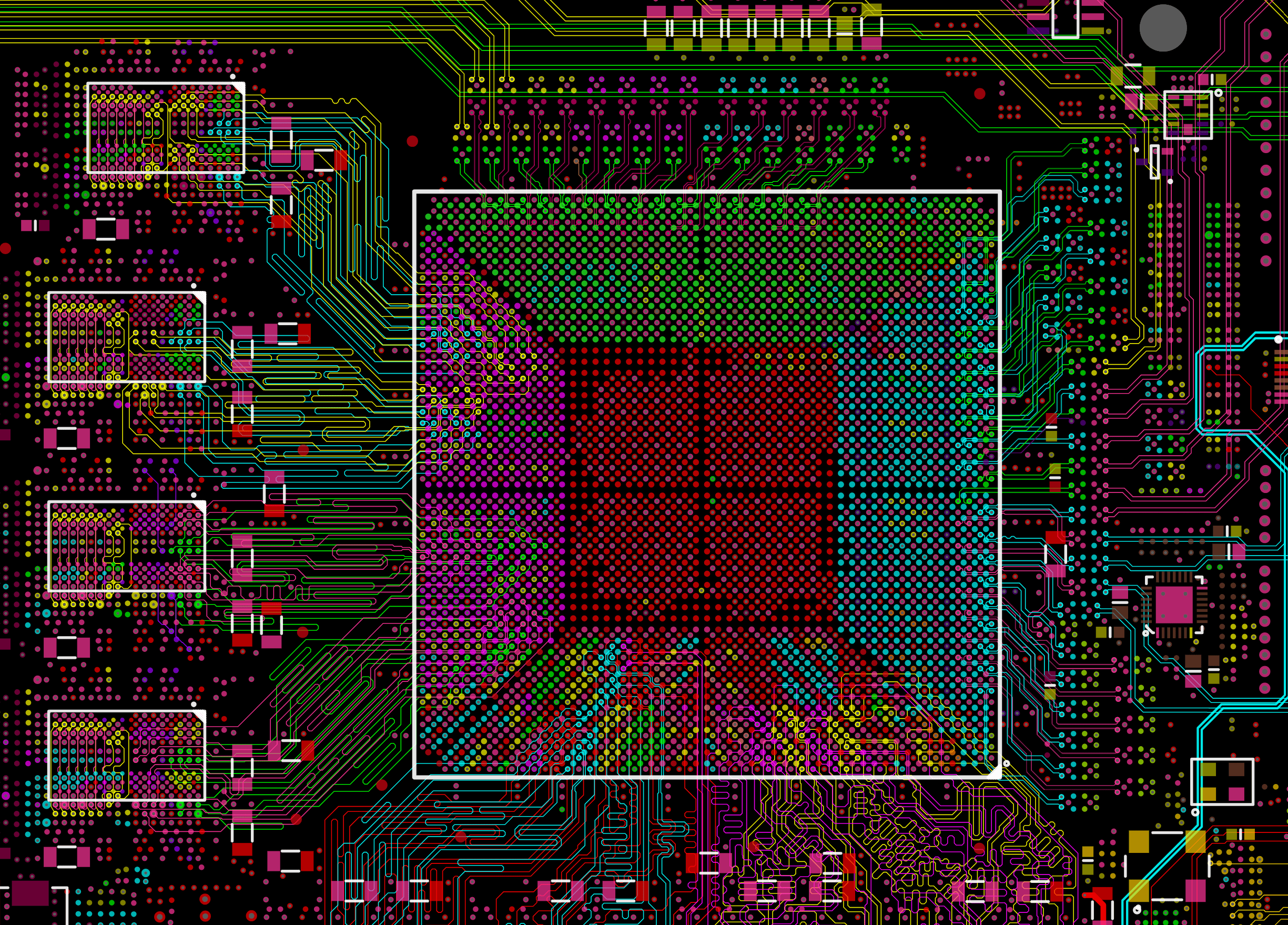
Multi-layer layout with optimized power distribution planes, ground isolation regions, and stable PDN design for high-current and high-speed coexistence on a 100GbE networking board.

View case study
Connected Car Demonstration Unit

Connected Car Demonstration Unit

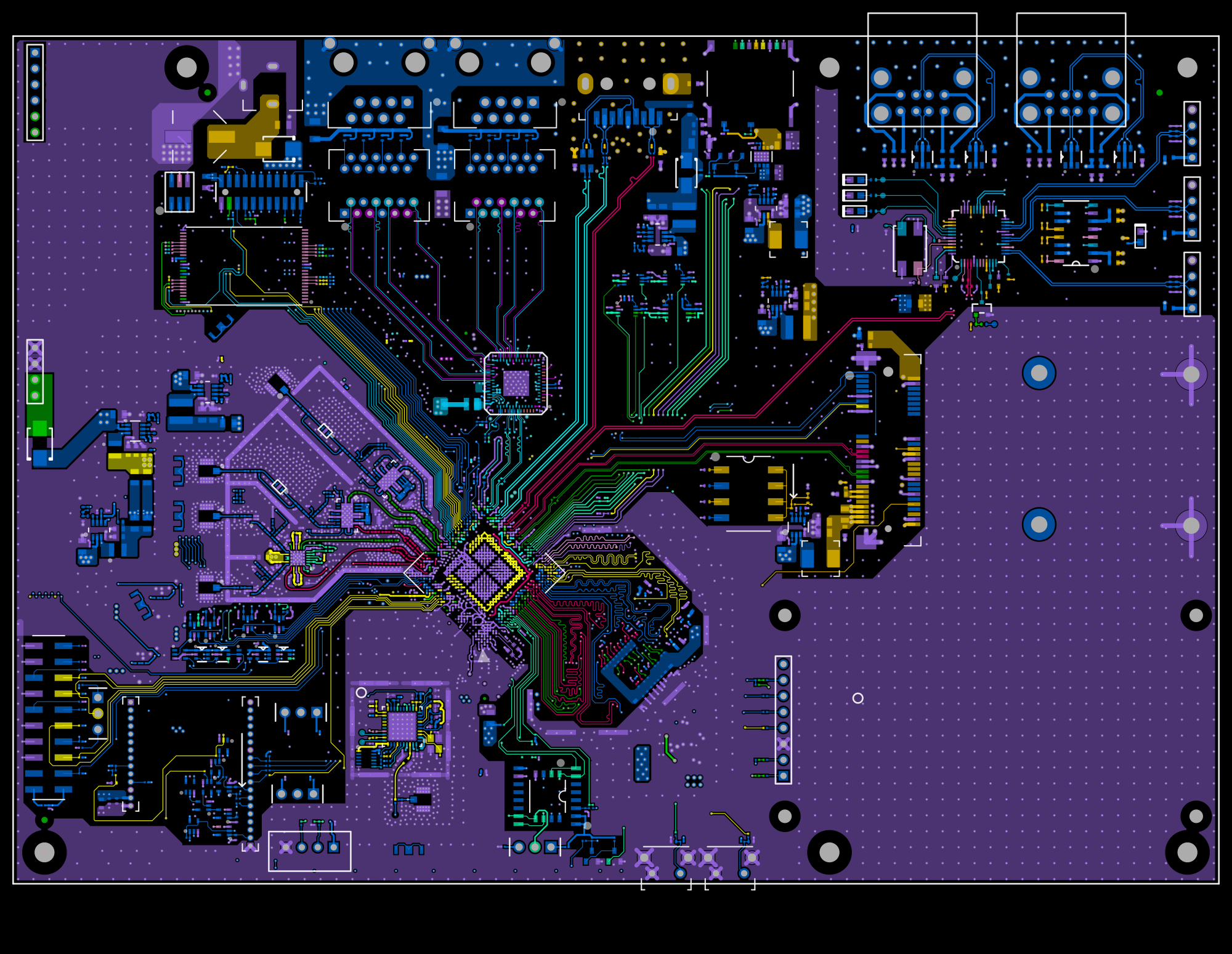
Power PCB layout for a connected car demonstration unit with disciplined switching-node placement, filtered power rails, and EMI containment for automotive EMC compliance.

View case study
3 phase Smart Energy Meter

3 phase Smart Energy Meter

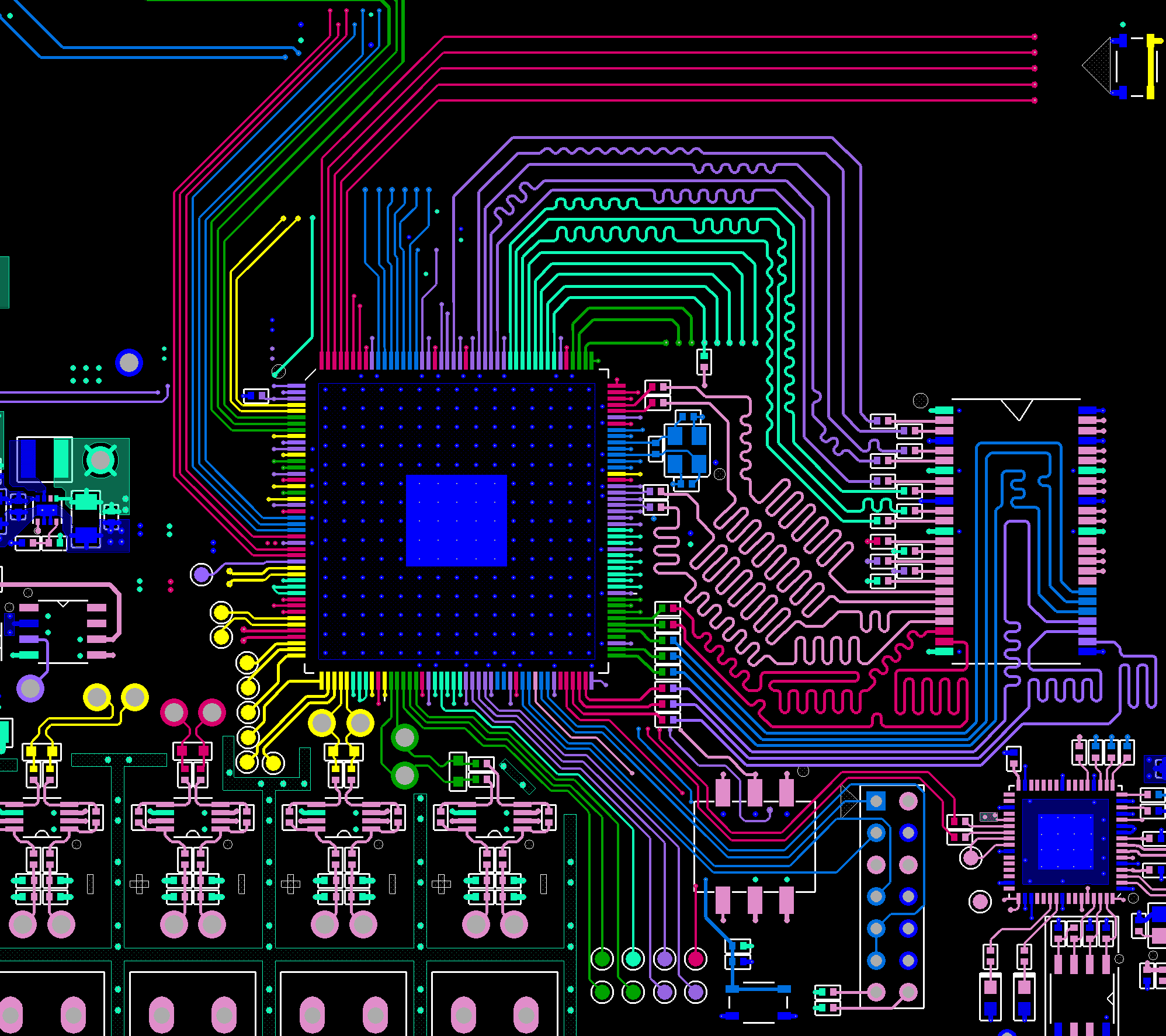
Precision 3-phase smart energy meter PCB with high-accuracy sensing, reinforced isolation barriers, and clearance/creepage compliance for mains-connected metering applications.

View case study

Why Choose Qmax Systems?

25 years of power electronics PCB expertise - from HV isolation to EMI-compliant production files.

Engineering-Led Design

All our PCB designers are Electrical Engineers capable of understanding circuit functionality and performing circuit analysis.

First-Time-Right Philosophy

Qmax Systems follows a structured, 25-year evolved process with checklists covering HV safety, EMI, thermal, and manufacturability.

Compliance-Ready Layout

CE, FCC, UL, and IEC certification requirements addressed from Day 1, not as a late-stage retrofit.

IP Ownership

The customer retains 100% ownership of all native CAD files, libraries, and simulation data.

Questions? Let's Talk! Contact us. Saravanabhavan, Founder & CEOQuestions?
Let's Talk!
Contact UsSaravanabhavan
Founder & CEO

Get a Complimentary Consultation with Our Power Electronics Experts.

1-hour session with a Qmax Systems Senior Hardware Architect. Practical, engineering-driven - no sales pitch.
Schedule Consultation

Case Studies

More Case Studies

Frequently Asked Questions

How do you handle high-current requirements in small form factors?
Qmax Systems uses heavy copper PCBs (up to 14oz+), busbar integration, and thermal via arrays to maximize current-carrying capacity while maintaining a compact footprint, supporting 1000A+ DC sources.
What standards do you follow for high-voltage isolation?
We adhere to IPC-2221B for generic design and IEC 60601 (medical) or UL 62368-1 (IT/AV) for specific safety clearances and creepage distances, up to 1500VDC working voltage.
How do you mitigate switching noise in SiC or GaN designs?
We minimize loop inductance in the gate-drive and power loops, place Pi-filters and snubbers, and use 3D EM simulation to identify and suppress high-frequency harmonics for CISPR 32 compliance.
Do you design custom magnetics for power converters?
Yes. Qmax Systems specifies core materials, winding geometries, and litz wire for custom inductors and transformers to optimize efficiency and thermal performance in power converters.
How do you validate thermal management?
We perform 3D thermal analysis to identify hotspots and optimize the interface between the PCB, power components, and heatsinks or enclosures, preventing junction-temperature violations.
Can you assist with boards that failed EMI (CE/RE) testing?
Yes. Qmax Systems provides rescue services, using near-field probes to locate noise sources and redesigning layouts to meet CE and FCC compliance.
Do you support busbar-to-PCB integration?
Yes. We design the mechanical and electrical interfaces for high-current busbars, ensuring reliable connections for industrial PDUs and motor drives.
What materials do you recommend for high-power applications?
Qmax Systems uses standard FR-4 where suitable, metal-clad substrates (IMS) for heat dissipation, and high-Tg materials for high-temperature environments.
How do you manage THD in PFC controllers?
We focus on precision current-sensing layout and low-impedance feedback paths so PFC controllers maintain high power factor and low Total Harmonic Distortion (THD).
Do you provide fabrication support?
Yes. Qmax Systems acts as a direct technical liaison with fabrication houses, resolving stackup, material, and DFM issues before production.